
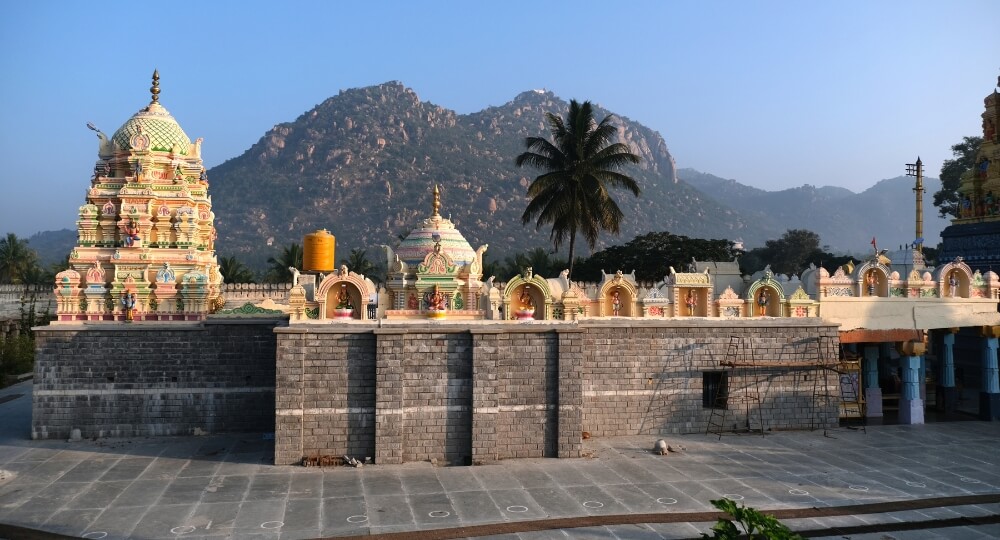
Tirupati is synonymous with the Sri Venkateswara Temple, which is actually located 980 metres above sea level. The city, at the foothills of the Seshachalam Hills, is the abode of the Sri Padmavati Ammavari Temple, the consort of Lord Balaji. Millions of pilgrims visit the city to pray to Lord Venkatesa, an incarnation of Vishnu. The temple is considered one of the wealthiest in the world, as Lord Venkateswara is associated with spiritual and material prosperity. Read on to learn more about the city and Travel Guru’ Tirupati tour packages.
Call us or send a message on Instagram to customise your Tirupati tour package.
Tirupati is the second-largest city in the Rayalaseema region of Andhra Pradesh and one of the most visited pilgrimage places in India. Until 2022, the city was part of Chittoor District when it was declared a separate district for administrative convenience. The city is home to one of the world’s wealthiest temples, the Sri Venkateswara Temple in Tirumala. But it’s not this temple alone that’s famous in the city – it is home to several ancient temples revered by Hindus. No wonder Tirupati was named the Best Heritage City in 2012-2013.
Besides the temple, the city attracts people for various reasons. For instance, Tirupati is home to Sri Venkateswara University and the Vedic University. It also houses several medical speciality hospitals, schools, and colleges. People also visit the city to marry in one of the holiest cities for Vaishnava Hindus.
Call us at +91 83675 01501 to learn more about our Tirupati tour packages.
Nobody knows exactly when the town of Tirupati was established, although the temple of Lord Balaji is believed to have existed since at least 300 BC. While not much is known about the region’s ancient history, it is thought that the city was developed during the reign of Raja Thondaiman of the Thondaimandalam region. However, legends claim that the statue of Lord Balaji existed in the same place even before the temple was built. Over the years, the city was developed by several dynasties, including the Cholas, Pallavas, and the Vijayanagara kings, who made significant contributions to the temple.
As for the Tirumala Hills, they could be over several million years old and are believed to be a physical manifestation of Adisesha, Lord Vishnu’s divine shelter and seat. They are a set of seven hills, called Saptagiri, and thought to represent the seven heads of Adi Sesha, with the temple of Lord Balaji standing on the 7th hill called Venkatadri.
Tirupati is also mentioned in several ancient Tamil literary works, including Tholkaappiyam and Cilapadhikaram. In fact, the word Tirupati is derived from Tamil words Thiru, a Tamil honorific meaning Shri or sacred, and Pathi, meaning abode.
Call us at +91 83675 01501 to learn more about our Tirupati tour packages.
Tirupati is at the foothills of the Seshachalam Hills, a hill range in the Eastern Ghats. The city is located 162 metres above sea level, while the Tirupati Temple on Tirumala Hills is 980 metres above sea level. Tirupati has a hot and humid tropical climate with three distinct seasons: summer, monsoon, and winter. The city experiences a tropical climate, which means summers are scorching, while the monsoon is characterised by heavy rainfall. Like many South Indian regions, the city experiences two monsoons, one from July to September, when southwest clouds bring moderate rains, and another from October to December, when northeast clouds bring heavy rainfall.
Needless to say, religious tourism is the driving force in Tirupati. Thanks to the millions of devotees who visit the city every year, the city bustles with hotels, restaurants, travel agencies, and other allied businesses related to hospitality. Besides hospitality, Tirupati is known for its agricultural and livestock sector, as well as mining and quarrying.
Call us at +91 83675 01501 to learn more about our Tirupati tour packages.
Call us at +91 83675 01501 to learn more about our Tirupati tour packages.
Call us or send a message on Instagram to learn more about Travel Guru’ Tirupati tour packages.
| Category | Details |
| District | Tirupati |
| High Season | November to February |
| Languages Spoken | Telugu, Tamil, English |
| Famous Tourist Attraction | Venkateshwara Temple, Padmavati Ammavari Temple, Srikalahasteeswara Temple |
| Famous Food | Srivari Ladoo, Pulihora |
| Souvenirs to Buy | Religious Souvenirs, Kalamkari Handloom, Venkatagiri Sarees, Woodcarving |
Planning a holiday to Kaliyuga Vaikuntha? Call us to learn more about our Tirupati tour packages.
Every year, over 30 to 40 million tourists visit Tirupati to seek blessings from Lord Balaji. Devotees believe that Lord Vishnu manifested on Bhuloka (the earthly world) to bless saints. Over the years, as we reached Kaliyuga, he began to be prayed to by devotees seeking money, success, and good fortune. When their wishes are fulfilled, the devotees express gratitude by making offerings of money, land, gold, or even their own hair. This practice has been going on for centuries by kings and queens. In fact, the Vijayanagara king, Krishnadevaraya’s contributions to the temple are compiled in seven volumes, including one exclusively for gold. Besides the Sri Venkateswara Temple, people also visit Tirupati city to explore its many waterfalls and other temples.
Below are some of the reasons to choose Tirupati tour packages.
The idol of Lord Venkateswara is believed to have been self-manifested over several million years ago to guide humanity during the Kali Yuga. He is considered a benevolent deity who fulfils the wishes of devotees seeking his blessings. People often pray to the God seeking relief from misfortune, asking for prosperity, and spiritual well-being.
In fact, it is a common practice among Hindus to seek the blessings of Lord Balaji before starting a new venture. Devotees visit Tirupati seeking the removal of obstacles in marriage, business, and academics. People also visit the temple to fulfil a vow after their wish is granted – this could include offering their hair, money, or gold. Some vows involve walking up to the temple by climbing 3550 (or 2388, depending on the route) steps.
But the Sri Venkateswara Temple isn’t the only place devotees visit. They also visit the Padmavati Amma temple, the Govindarajaswami Temple, Sri Varahaswamy Temple, the Kalyana Venkateswara Swamy Temple, and the Kapileswara Temple in Tirupati.
Each of these deities is associated with the legend of Lord Balaji, and is equally important.
People also visit Tirupati to seek remedies for problems in their horoscopes. These problems, called Doshas, could be related to marriage, health, prosperity, luck, academics, or peace in one’s life. Visiting Tirupati is believed to help mitigate the adverse effects of planetary alignments. For instance, people believe that worshipping Lord Balaji helps mitigate the malefic effects of planets such as Saturn (Lord Shani), Rahu, and Ketu.
Devotees also visit the Navagraha Shrine within the complex to perform Pradakshina or circumambulation to harmonise planetary misalignments.
Visiting the Tirupati Balaji temple is believed to energise certain planets, such as the Sun and Jupiter (Guru).
But Tirupati is also associated with another temple famous for astrological remediation. The Sri Kalahasti Temple in Kalahasti, Tirupati, is famous for the Rahu-Ketu Pooja. People visit here to remove Karmic burdens and seek inner peace.
Tirupati is associated with several festivals celebrating Lord Balaji, Goddess Padmavati Amma, Lord Govindaraja Swamy, Kalyana Venkateswara, and Goddess Gangamma.
The most popular of these is the annual Brahmotsavam, a nine-day festival which is believed to have been initiated by Lord Brahma himself to honour Lord Vishnu. Millions of people attend this festival, especially the Garuda Seva when the deity is carried on a Garuda Vahanam.
People also visit the temple during Vaikuntha Ekadashi as it is believed that the doors of Vaikuntha are open during this day.
During the Vasanthotsavam or Spring Festival, devotees visit the temple to witness the processional deities of Malayapaswami and his consorts being bathed in fragrant water.
Another popular festival celebrated by locals is the Gangamma Jatara, held to commemorate Goddess Gangamma, the younger sister of Lord Balaji. This week-long festival is celebrated with great pomp, with parents inviting their daughters from across the world to witness the celebrations. While there are unique events throughout the festival, the concluding event is the highlight – the Chempa Tholagimpu, when the cheeks of the installed clay idol of Goddess Gangamma is removed and distributed to devotees.
The marriage of Goddess Padmavati with Lord Balaji is another important event in the city’s annual calendar.
Besides the different temples, there are many natural and historical attractions to explore with your Tirupati tour packages. The city, set in the mountainous terrain, is full of waterfalls, fascinating rock formations, and extensive forests.
The Talakona Falls is the highest waterfall in Andhra Pradesh and is located a few kilometres from Tirupati. Water cascades from a height of 270 feet, falling into a serene pool where you can swim or bathe. The water is known to have healing properties thanks to the saints and sages who strolled these forests. The way to Talakona is equally mesmerising, as you pass through the Seshachalam Biosphere Reserve, home to several indigenous animals.
The Chandragiri Fort is a famous historical attraction constructed in the 11th century during the Vijayanagara Empire.
The Gundalakona and Gunjana waterfalls are a few kilometres from Tirupati but within the Seshachalam Hills.
The Silathoranam is another naturally occurring arch-shaped rock formation, believed to be over 2.5 million years old.
The Sri Venkateswara Zoological Park is a large zoo spread over 5500 acres and home to various animals, including tigers, leopards, sloth bears, bison, bonnet monkeys, and golden geckos.
The Kapila Theertham is another famous waterfall in the Seshadri Hills of the Tirumala hill range. The water falls from over 100 feet into a large pond that’s located within the Kapileshwara Swamy Temple.
While food isn’t one of the main reasons to choose Tirupati tour packages, it is definitely a hidden bonus. Tirupati is part of Rayalaseema, a region known for its hot, spicy, rustic cuisine. The cuisine is heavily influenced by South Karnataka and Tamil Nadu, thanks to its proximity to the states. With chillies grown abundantly in the region, the dishes are fiery and hot. Some of the legendary dishes include Pachi Pulusu, a hot and tangy rasam served with hot rice; Natu Kodi Pulusu, a fiery gravy made with free-range chicken; and Ragi Sangati, a millet-based porridge. Ulava Charu, a rasam made using horsegram, is another favourite. Mamsam Koora, a hot mutton-based curry, is a must if you visit Tirupati. If your plan is to eat breakfast at Tirupati, don’t miss the Karam Dosa. A specially made chutney made with raw red chillies (or green chillies) and onion is spread over a thin dosa and served with dollops of ghee. The taste is heavenly.
As mentioned earlier, Tirupati experiences three distinct seasons: hot summers, humid monsoons, and pleasant winters. The average temperature in Tirupati ranges between 29°C and 42°C. Read on to learn more about the weather in Tirupati during the different seasons and the best time to choose Tirupati tour packages.
March to June is peak summer in Tirupati with the average temperature ranging from 35°C to 42°C during the day and around 27°C at night. Sometimes, temperatures could reach up to 43°C. While this isn’t the most pleasant time to visit Tirupati, it is also the least crowded, especially during March when most families are busy with school and college exams. To avoid extreme heat, you can arrange for darshan in the early morning or late evening.
This is the time for major festivals like the Teppotsavam and Ugadi Asthanam in March, Vasanthotsavam and Srirama Navami in April, and the Padmavathi Parinayam in May. Another important festival in May is the Gangamma Jatara, a week-long event in which locals honour Goddess Gangamma, believed to be Lord Balaji’s sister.
While July to September is the monsoon season across India, Tirupati experiences moderate rainfall during this season. Rains are intermittent but transform the landscape, providing a visual treat to devotees and bringing respite from the heat wave.
However, rain does not deter crowds who visit Tirupati during the Bramhotsavam, held between September and October. This nine-day annual festival includes special poojas and processions of deities. It is one of the temple’s major events and is attended by millions of devotees from across the world. Call us if you’d like to choose Tirupati tour packages during the Bramhostavam.
Tirupati also experiences post-monsoon showers between October and December, when northeast monsoon clouds bring heavy rains and even floods to the region. This is indeed a lean period as uncertain weather keeps devotees away from Tirupati. If you are planning a visit during this season, we suggest you check the weather, as the city is prone to sudden cyclonic rains and flooding between October and December.
While December is considered the post-monsoon season, rainfall is minimal in the region during this month. The weather is pleasant and dry with temperatures ranging from 25°C to 30°C during the day. At night, temperatures can drop to 17°C or even lower during peak winter. This is one of the best times to choose Tirupati tour packages. It is also a great time to explore other tourist attractions, such as Talakona Waterfalls and Kapila Theertham, thanks to the monsoon showers that feed them.
The Sri Venkateswara Temple in Tirumala Hills is considered Bhuloka Vaikuntham and is dedicated to Lord Balaji, an incarnation of Lord Vishnu who is believed to have descended on Earth to save mankind during Kali Yuga. Devotees believe that the statue of Lord Venkateswara is self-manifested and was found by a cowherd. The Chola King Tondaiman constructed a temple for the statue. Ever since, the temple has flourished under different rulers and is now one of the most visited temples for Hindus. They believe that praying to Lord Balaji alleviates hardships and removes obstacles related to job, prosperity, marriage, and education. With their wishes fulfilled, devotees express gratitude by offering gold, money, or even hair to the Lord.
No wonder the temple holds several world records, including the highest donation of hair. The temple receives donations worth over 1600 crores every year, a majority of which is spent on the upkeep of the temple and on sponsoring several charitable works.
The Srikalahasti Temple is dedicated to Lord Shiva and located in Kalahasti Town, about 40 km from Tirupati. The temple is considered one of the Pancha Bhoota Sthalas, representing the element of wind or Vayu. Devotees visit the temple for relief from planetary afflictions related to Rahu and Ketu.
While the Kalahasti Temple is not included in a typical 2-3 days Tirupati Tour Package, you can always include it in your itinerary. Call us at +91 83675 01501 to learn more.
Talakona is one of the highest waterfalls in Andhra Pradesh, located about 50 km from Tirupati. The water here falls 270 feet and is within the Seshachalam Biosphere Reserve, which encompasses the dense Talakona Forest region. Locals believe the water from Talakona has healing properties because it passes through a forest path rich in medicinal herbs. This is a one-day trip, but if you’d like to stay, there are plenty of guest houses and resorts within the Talakona Forest range.
Chandragiri is a suburb of Tirupati, famous for its historical fort. This fort was built in 1000 CE by Immadi Narasimha Yadava Raya, but later fell into the hands of the Vijayanagara kings. It covers over 25 acres and is divided into the lower fort and the upper fort. While a lot of the fort is now in ruins, two buildings, viz., Raja Mahal and Rani Mahal, are well preserved.
Call us at +91 83675 01501 to include Chandragiri Fort in your Tirupati tour packages itinerary.
The Gunjana Falls is part of the Sri Venkateswara Wildlife Sanctuary in the Seshachala Hills. While the waterfalls are worth visiting, we suggest you avoid exploring the area without a proper guide, as the terrain is rocky and the route can be confusing.
This beautiful waterfall is a few kilometres from Tirupati and is famous for its crystal clear waters that cascade from 50 feet. The water cascades into a pool in the Gundaleswara Swamy Temple.
The Akasaganga Theertham is located a few kilometres from Tirupati and considered a sacred waterfall – the water from these falls is carried to the temple for regular rituals. Bathing in these waters is considered sacred and said to bring good fortune. The best time to visit these falls is during the rainy season when the surrounding area is lush and verdant. But it can be crowded, so remember to check with the tour guide about the best time to visit these cascades.
Silothoranam are the last remnants of a rock formation believed to be over 1.5 billion years. The Silothoranam is a natural arch about 25 feet wide, with two rock columns joined by a thin link. It is one of the few sites that have undergone the Eparchean Unconformity—a rare geological fault that has undergone extreme corrosion. It is believed that the Lord Venkateswara placed his foot on the arch on his way to Tirumala Hills.
The Sri Venkateswara National Park is a biosphere reserve spanning over 353 sq. km on the outskirts of Tirupati city. The national park stretches over Chithoor and Kadapa districts and is home to three of Andhra Pradesh’s major waterfalls – Talakona, Gunjana, and Gundalakona. It is home to several rare and indigenous flora and fauna, including red sanders, sandalwood, and the Cycas Beddomei. It also houses rare animals like slender lorises, golden geckos, and stump-tailed macaques.
The Kapileswara Temple is located on the Tirumala Hills and is named after Sage Kapila, who performed penance here. The temple is famous for its waterfalls, where the streams from the Tirumala Hills descend into the Pushkarini. The Kapileswara Temple received patronage from the Vijayanagara kings and is now a popular site.
Call us at +91 83675 01501 to learn more about our Tirupati tour packages.
Sri Govindaraja is believed to be the elder brother of Lord Venkateswara, who arranged for the marriage of Lord Venkateswara with Goddess Padmavati, and is believed to have safeguarded the wealth obtained from King Kubera. Praying to Govindaraja is supposed to bring a person immense wealth and prosperity. The temple was consecrated by Ramanujacharya in the 11th century, after he had a dream in which Lord Govindaraja asked him to arrange for his residence in Tirupati.
The Padmavati Ammavari temple is dedicated to Padmavati Amma, the divine consort of Lord Balaji. The temple is located in Tiruchanoor, a town close to Tirupati. It was initially built by Thondaiman Chakravarthy, but later renovated in the 14th century by the Vijayanagara kings. Locals believe that one must visit the temple before heading for Darshan to the Venkateswara Temple in Tirumala.
The Bhu Varahaswamy Temple is an incarnation of Lord Vishnu, appearing as a wild boar. In fact, the Tirumala Hills region is believed to belong to Sri Varahaswamy – the area was also called Adi Varaha Kshetra. Since Varahaswamy granted land to Lord Balaji, the latter returned the favour by ensuring devotees first visit the Varahaswamy temple before heading to the Venkateswara Temple.
The Kodanda Rama Swamy Temple is dedicated to Lord Rama, an avatar of Lord Vishnu. It was probably built in the 10th century during the reign of the Chola kings. It is believed that Lord Rama rested here along with Goddess Sita and Lakshmana on their way back to Ayodhya.
The Swami Pushkarini Lake is a sacred tank in Tirumala, where Lord Balaji and his consort, Padmavati Amma, are believed to have bathed. Locals believe that Garuda created the lake for bathing and that it originated in Vaikuntham. Bathing here is thought to wash away sins, especially during the Mukkoti Dwadashi.
Also called Ubbalamadugu Falls, Tada Falls is a popular trekking destination two hours from Tirupati. Water cascades from a height of 100 metres, breaking into little streams and gushing from rocky hill formations.
The Pulicat Bird Sanctuary in Tirupati District attracts several migratory birds, especially flamingos, which visit the Pulicat Lake between October and March. Pulicat Lake is India’s second-largest brackish water body and is home to several invertebrates, including plankton, molluscs, and insects. Besides flamingos, other migratory birds that visit the lake include pelicans, storks, and various duck species.
Tirupati is famous for its woodcarvings of deities and other decorative items. You can buy them from local shops or the government-owned Lepakshi Showrooms across the city. Venkatagiri, a town near Tirupati, is famous for its Venkatagiri sarees. Meanwhile, Kalahasti is famous for its handloom sarees.
You can buy Kalamkari paintings, including sarees and dress materials with hand-painted Kalamkari designs, at affordable prices in nearby towns like Lepakshi.
Call us at +91 83675 01501 to learn more about Travel Guru’ Tirupati tour packages.
As part of the Rayalaseema region, Tirupati is famed for its fiery cuisine. Given that chillies grow in this region, they are used copiously in everything – from Nallakaram Podi to Pachi Pulusu Rasam and the tongue-tingling Karam Dosa.
The food is known to be robust, spicy, tangy, and to use locally available ingredients. It is unlike the complex flavours of Deccani cuisine that are rich and influenced by Mughlai, Arabic, and Turkish flavours.
The Rayalaseema region has a harsh, arid climate, making it suitable for resilient crops such as millets and pulses. Ragi or finger millet, along with Sorghum, foxtail millet and rice, is the staple food in Rayalaseema. Ragi Sangatti, or porridge made from finger millet, is a huge favourite and is eaten with spicy curries like Natukodi Pulusu, Gongura Mamsam, Mutton Pulusu (mutton curry), Royyala Iguru (spicy prawn curry), and Chepala Pulusu (fish curry). As for vegetarian fare, you must try the Gutti Vankaya Curry or stuffed eggplant gravy.
As for snacks, there are so many varieties to choose from: Garelu (Wada), Alasanda Vada (Fritters), Ariselu, Bobatlu, Paddu, Pootharakelu, and Uggani Bajji. When visiting Kalahasti, don’t miss Palkova, a famous sweet delicacy in the town.
If you love non-vegetarian meals and don’t mind the nondescript ambience, check the Redamma Mess, an iconic place in Tirupati that serves a variety of non-vegetarian food, including fish kabab, Botti curry, mutton curry, chicken curry, and Bheja fry.
While Tirupati isn’t renowned for handicrafts, you can always buy brassware from Lepakshi Stores across the city. The Tirumala Tirupati Devasthanam, the trust that manages the temples in Tirupati, regularly conducts dance performances and Carnatic music programs across the city. You can always enjoy classical recitals, Hari Kathas, and dance programmes in these auditoriums for a nominal cost.
Call us at +91 83675 01501 to learn more about our Tirupati tour packages.

November to February is the best time to explore Tirupati as the temperature drops significantly during these months. But the temple is likely to be crowded – we suggest booking your online darshan early.
Yes, Tirupati is a safe place. However, we suggest you follow common-sense tips, such as avoiding travel alone after dark, dressing modestly, and not accepting food from strangers, to ensure personal safety.
To explore this beautiful city in the Rayalaseema, we suggest booking Tirupati tour packages for 2-3 days. If you'd like to include nearby attractions like Sreekalahasthee and Talakona Waterfalls, we recommend a longer package.
Yes, you can always customise your itinerary to include or remove certain attractions.
We offer easy instalments for select destinations/tour packages. Call us at +91 9940882200 or send a message on Instagram to discuss payment plans.
Non-Hindus can visit the Tirumala temple after signing a declaration that they believe in Lord Venkateshwara. Similarly, foreign nationals and NRIs can visit the temple using the Supadam Entry Gate.
Your Tirupati tour package includes accommodation, transfers, activities, sightseeing tickets, food, and a tour guide.
Religious souvenirs, such as statues, miniature models of the Sri Venkateswara Temple, keychains, and bracelets, as well as prasadams like ladoos, are popular gifts. Besides these, you can also buy Kalamkari sarees and Venkatagiri sarees are also famous souvenirs.
The cost of your Tirupati tour package varies based on the itinerary duration, accommodation type, included activities, and any additional requests made during booking.
Share your travel dates and preferences. Our experts will create a personalised holiday for you.
☎ +91 83675 01501
✉ travelguru@gmail.com