
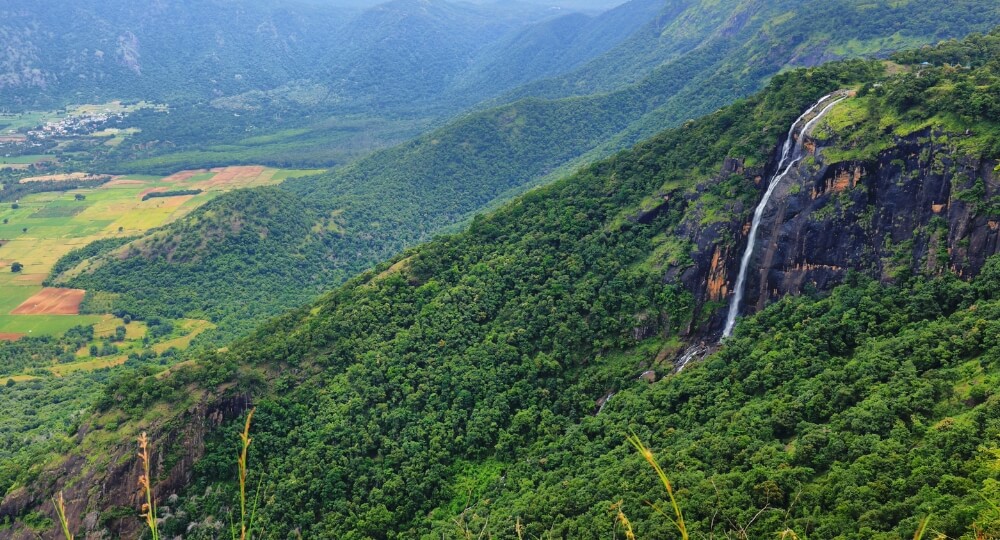
Thekkady, a gem tucked in Kerala’s Western Ghats, is where the forest feels alive. The air carries the scent of cardamom, pepper, and rain-soaked earth. Misty hills stretch endlessly into the clouds, each curve revealing a new shade of green.
The journey from Kochi or Madurai feels like a slow unfolding. Tea gardens give way to spice plantations, waterfalls, and quiet valleys. Roadside stalls offer hot chai and banana fritters, making the drive itself an enjoyable experience.
By the time you reach Thekkady, city noise fades into birdsong. Watching elephants bathe in the lake or mist rise over the hills is pure calm. For travellers who crave peace, greenery, and authenticity, Thekkady Tour Packages deliver nature’s perfect rhythm.
Thekkady is a place to breathe, listen, and be moved by the majesty of the forest and the life that it shelters.
Explore our carefully curated Thekkady Tour Packages to discover misty mornings, tranquil lakes, and moments you will cherish when you return to the usual rhythm of life.
Set amid the southern reaches of the Western Ghats, Thekkady is one of Kerala’s most scenic and biologically rich hill regions. Located in the Idukki district, it lies close to the Tamil Nadu border, about 145 kilometres from Kochi and 120 kilometres from Madurai. The town itself stands at an elevation of around 700 metres above sea level. In comparison, nearby ridges of the Periyar hills rise between 900 and 1,800 metres, creating a dramatic landscape of rolling uplands and mist-filled valleys.
The terrain of Thekkady changes beautifully from evergreen rainforests to semi-evergreen woodlands, and from moist deciduous trees to open grasslands. Through these forests flow small streams and rivers that join at the Periyar Lake, an artificial reservoir formed by the Mullaperiyar Dam built across the Periyar River in the late 19th century. This vast lake now acts as the lifeline of the Periyar Tiger Reserve, nourishing its wildlife and adding a calm, reflective charm to the region’s green heart.
Thekkady and the nearby town of Kumily, just four kilometres away, form the main gateway to the reserve. Kumily’s hotels, spice markets and small shops blend effortlessly with the forested hills, making it both a tourist centre and a local trading hub. Roads climb steadily from the plains of Tamil Nadu through cardamom and pepper plantations, reaching Thekkady’s cool plateau.
The area enjoys a tropical highland climate — warm days, cooler nights and heavy monsoon rainfall between June and September. Average temperatures range from 15 °C to 30 °C, keeping Thekkady pleasant through most of the year. During the monsoon, thick rain clouds drape the hills, filling waterfalls and streams, while winter months bring crisp mornings and excellent wildlife-viewing conditions.
Ecologically, Thekkady lies within the Western Ghats UNESCO World Heritage Zone, recognised for its exceptional biodiversity. More than 1,900 species of flowering plants, including wild orchids and medicinal herbs, grow in these forests. The surrounding Periyar ecosystem shelters elephants, gaur, sambar deer, lion-tailed macaques, and over 260 bird species.
Encircled by spice plantations of cardamom, cinnamon, tea, and coffee, and enriched by steady monsoon rains, Thekkady represents a perfect balance of nature and cultivation. The thick vegetation and constant moisture maintain the region’s water balance and help protect the fragile ecology of the Western Ghats.
Together, the forests, rivers, plantations and hills make Thekkady not only a scenic retreat for travellers but also a living classroom of tropical ecology.
Around Thekkady and inside the Periyar Tiger Reserve live several indigenous tribal communities who have inhabited these forests and hills for centuries. These tribes form an essential part of Thekkady’s identity and continue to live close to nature.
The main tribal groups are the Mannans, Paliyans, Uralis, Malay-Arayas, Malampandaram, and a few smaller clans. The Mannan tribe once had its own small kingdom, ruled by a local tribal king, and held traditional rights to fishing and collecting forest produce. The Paliyan tribe, known as ancient forest dwellers and hunters, now work with eco-tourism programmes as guides, sharing their deep understanding of the forest.
These communities maintain strong cultural and spiritual connections with the land. Their knowledge of plants, herbs, honey collection, and forest rhythms remains vital to understanding the local ecosystem.
Conservation projects in Periyar also include these communities. They participate in protecting the forest, demonstrating how nature and people can coexist when traditional wisdom meets modern conservation practices.
The history of Thekkady is as deep and layered as its forests. This region has witnessed the rule of ancient kingdoms, colonial engineers, and modern conservationists, each of whom has shaped its landscape in distinct ways.
Centuries ago, the Periyar Valley formed part of the Pandya Kingdom of Madurai. These fertile hills supplied honey, spices, and forest produce to southern trade routes. The name Thekkady comes from thekku, meaning teak, referring to the dense teak forests that once covered these slopes.
During the British era, the cool climate and rich soil of the Western Ghats encouraged the establishment of tea, coffee, and spice plantations. The hills around Kumily and Vandiperiyar became dotted with estates and planters’ bungalows that still stand today. This plantation economy reshaped Thekkady’s environment and remains central to its spice trade and tourism.
The defining chapter in Thekkady’s history began with the construction of the Mullaperiyar Dam, completed between 1887 and 1895 by Colonel John Pennycuick. Built across the Periyar River, the dam diverted water eastwards to Tamil Nadu’s dry plains. A 999-year lease signed in 1886 between the Travancore Kingdom and British Madras Presidency granted control to Tamil Nadu.
When completed, it created the vast Periyar Lake, submerging valleys and forming new forested wetlands. This artificial lake became the centre of the Periyar Tiger Reserve.
The dam stands as a colonial engineering marvel and a point of ongoing debate between Kerala and Tamil Nadu over safety and water use. For visitors, it remains a striking landmark — best viewed on boat rides on the lake, which reveal half-sunken trees and misty forest hills.
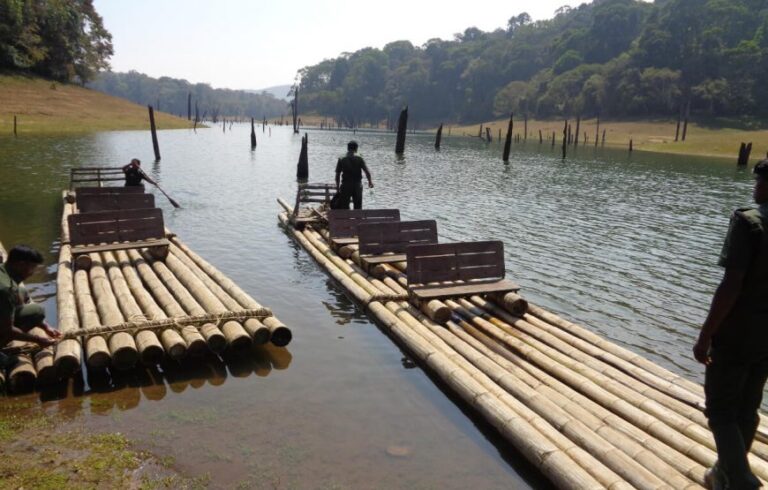
After independence, Thekkady’s focus shifted from plantations to wildlife conservation. The Periyar area became a sanctuary in 1950 and a tiger reserve in 1978. Today, guided treks, bamboo rafting, and heritage walks let travellers experience this rich blend of history and nature.
Thekkady does not have its own railway station or airport. The nearest access points are Kochi (Ernakulam) and Madurai, both linked to Thekkady by good roads.
The closest airports are:
From either airport, hire a taxi or board KSRTC/TNSTC buses to Kumily; the drive takes 4–4.5 hours depending on the route.
From these stations, regular KSRTC and TNSTC buses, as well as private taxis, operate to Thekkady and Kumily.
Thekkady is most conveniently reached by road. It lies on the Kottayam–Kumily Highway (NH 183), connecting Kerala’s plains to the Western Ghats.
State-run and private buses operate daily between Thekkady and major towns such as Kochi, Kottayam, Alappuzha, Thiruvananthapuram, and Madurai.


Yes, with standard precautions. Stay in known lodges, avoid late walks in dense forest zones, and follow guides’ instructions.
Book between September and March for optimal weather, wildlife activity and full package availability.
Absolutely — Thekkady and Kumily have many vegetarian and vegan options, plus Kerala-style vegetable dishes.
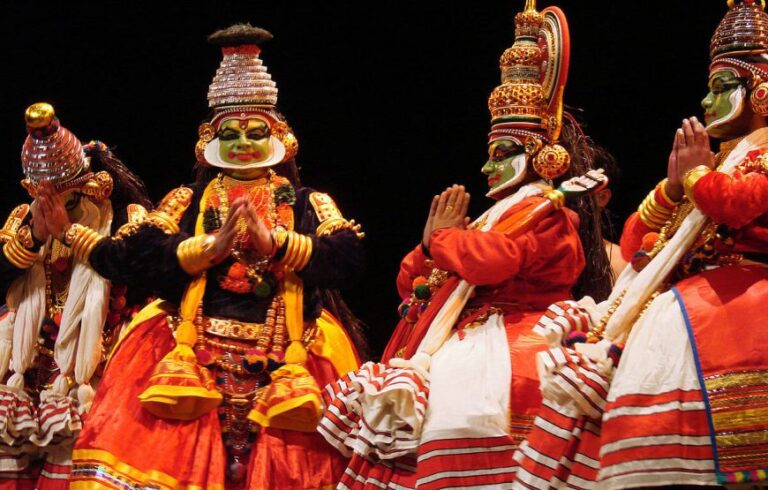
Yes — boat safaris, spice walks, gentle treks, cultural shows and moderate distances make it good for all ages.
No direct flights or trains. Transfers are usually from Kochi, Madurai or Kottayam by road via Kumily.
Yes — often paired with Munnar, Kodaikanal, Alleppey, or Periyar’s adjacent plantation routes in Kerala–Tamil Nadu circuits.
Malayalam is the main language; English is widely understood in tourist zones.
Private cabs or local taxis are the norm. Some lodges arrange guided transport for plantation walks or sanctuary trips.
Light cottons for day, a warm layer for early mornings, rain gear, walking shoes, binoculars, and power banks.
Share your travel dates and preferences. Our experts will create a personalised holiday for you.
☎ +91 83675 01501
✉ travelguru@gmail.com