

Pune, Mahabaleshwar
4 Days Pune Mahabaleshwar Holiday Package
3 Nights 4 Days
Unlimited

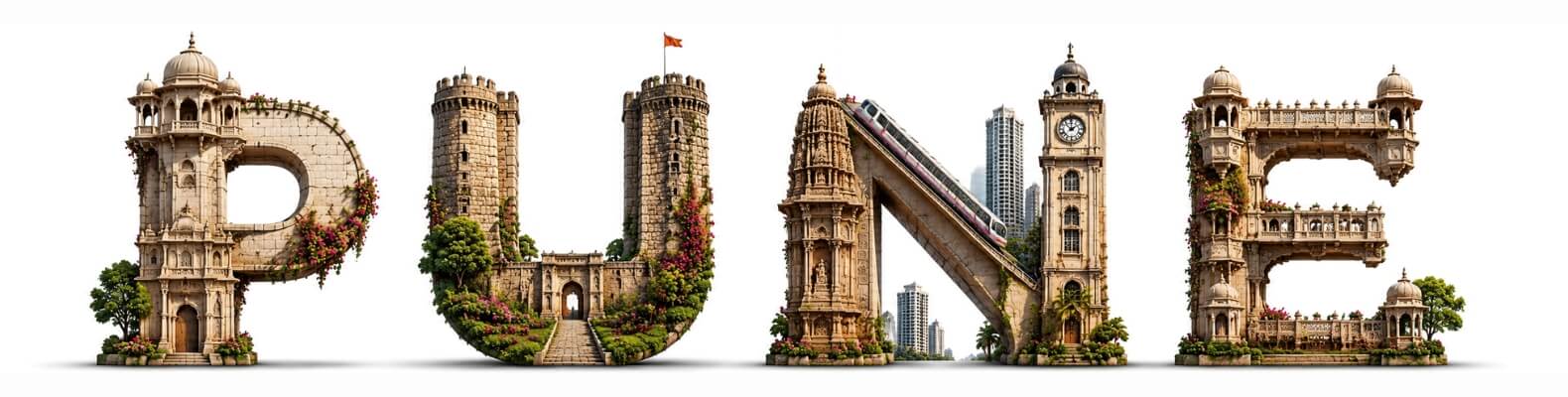
The ‘Oxford of the East’ is perhaps one of the most well-known titles given to Pune. While its esteemed educational institutions are indeed noteworthy, this city has so much more to offer. From its nightlife and Maharashtrian cuisine to the nearby hill stations, there is much to explore with Travel Guru’ Pune tour packages.
As you enter Pune, you will be welcomed by its warm and friendly people, who, despite their busy schedules, manage to remain simple and helpful. If greenery is what you wish to witness, then Pune’s lush green forests are a sight for sore eyes. It’s a city where modern buildings and natural beauty peacefully coexist. Let’s dive deep into the history, art, culture, food, tourist attractions, and shopping scene of Pune so you can find out what’s alluring about the ‘Queen of the Deccan’ and the cultural capital of Maharashtra.
Pune became the capital of the Bhonsle Marathas in the 17th century, thereby becoming a prominent seat of power in the country’s Deccan region. It came under the Mughal empire briefly in the early 18th century but was the official capital of the Marathas from 1714. British rule was established in Pune in 1818. Pune was known as Poona during British rule and the city received recognition as the monsoon capital of the Bombay Presidency because of its strategic placement and pleasant climate. The establishment of the Pune-Mumbai rail track in 1863, followed by the completion of the Khadakwasla Dam in 1879, added further importance to the infrastructural power of Pune. The historic Poona Pact was signed between Dr. B.R. Ambedkar and Mahatma Gandhi in 1932.
Pune has emerged as one of the most lucrative automotive and manufacturing industries in the country over the years. The presence of medium, small, and micro businesses in Pune has given it the title of the ‘Detroit of the East’. In the 1960s, champion companies such as Tata and Bajaj were established in Pune. With the development of these industries in the city, employees of various skillsets pertinent to the respective sectors were brought in. Individuals from different regions of the world and also abroad began to flock to Pune to attain jobs, thereby giving employment opportunities to several people.
As the private sector grew and it became evident that individuals with specialised skills were the need of the hour, the educational sector began to bloom. While streams such as science, linguistics, anthropology, and history were already prevalent in Pune, other specialised subjects started to gain popularity. This included engineering, management, and technology, giving birth of new kinds of training institutes. Not only did this bring in students from several parts of India, but also amplified the employment opportunities in the city.
| Category | Details |
| City | Pune |
| Currency | The Indian Rupee (INR) |
| High season | October to March |
| State Flower of Maharashtra | The Jarul |
| Standard Voltage | 230 volts |
| State Animal of Maharashtra | The Indian giant squirrel |
| Languages | Official: Marathi; unofficial: Hindi, English |
| Famous Tourist Attractions | Shaniwar Wada, Aga Khan Palace, Sinhagad Fort, Pataleshwar Cave Temple, Lal Mahal |
| Things To Do | Trekking, river rafting, camping, paragliding |
| Famous Food | Vada pav, misal pav, pav bhaji, bhel puri, poha |
| Places To Visit | Mahabaleshwar, Pawna Lake, Lonavala, Mumbai, Panchgani, Alibag |
| Souvenirs To Buy | Paithani sarees, Shrewsbury Biscuits, chappals, Osho merchandise |
If you’re wondering why our Pune tour packages are so popular, then here are some reasons that will make you realise that you need to visit Pune right away:
Regardless of which season you book our Pune tour packages are, you can be guaranteed beautiful and pleasant weather in Pune. The city enjoys a moderate climate all year long where it gets neither too cold nor too hot. Since Pune is situated on a relatively high altitude and is located on the leeward side of the Western Ghats, it experiences less humidity and extreme temperatures.
Pune is home to people of various cultural and religious backgrounds, which has contributed to its eclectic culinary landscape. Be it streetside stalls or high-end restaurants, Pune has an impressive array of eateries to discover. Whether you want to try out authentic Maharashtrian food, spicy chaat, or something sweet like Mango Mastani or Shrewsbury Biscuits, Pune has it all.
After a day of sightseeing, if you’re looking to relax and unwind, then Pune’s nightlife is the perfect option for you. Filled with vibrant pubs and nightclubs, you can dance the night away when in Pune. It’s among the few cities in India where such establishments are open till 4 am for locals and tourists to de-stress.
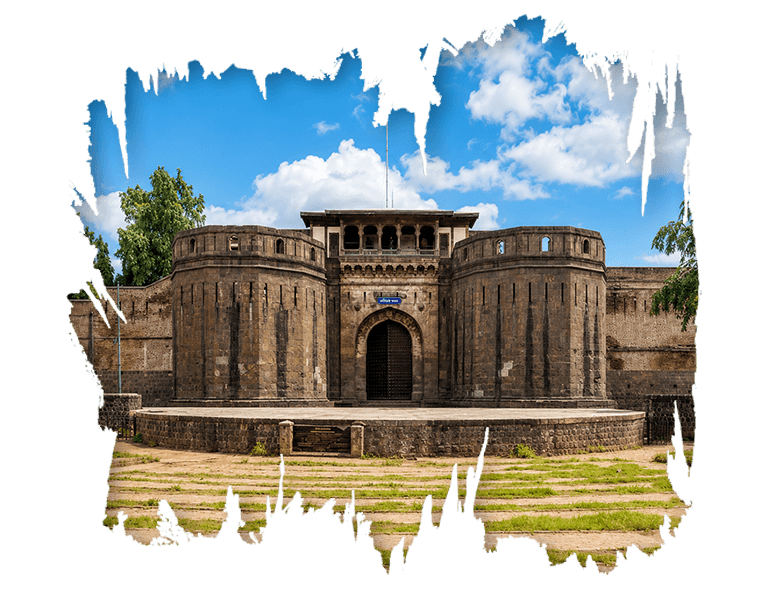
The cultural richness of Pune is reflected in the several vital historical attractions the city is home to. There is Shaniwar Wada, a 286-year-old piece of architecture which was once the headquarters of the Peshwa governance. Tourists can also explore the majestic Aga Khan Palace, which is not only architecturally brilliant but also historically significant. The palace played host to several freedom fighters who were imprisoned here during India’s freedom struggle from the British. Make sure to also visit the Sinhagad Fort, Pataleshwar Cave Temple, and Lal Mahal.
Pune has a tropical climate and is known to have pleasant weather throughout the year, with moderate rainfall and moderate temperatures. The city is situated in the rain shadow region of the Western Ghats, whereas Mumbai is located on the windward side. This is why Pune receives significantly less rainfall during the monsoon season than Mumbai. Let’s take a look at what each season in Pune is like so you can accordingly decide when to book our Pune tour packages:
During the summer season, the temperature in Pune ranges from 21 degrees Celsius to 41 degrees Celsius. Try to avoid visiting Pune during the months of April and May as there could be the risk of heat strokes. June, however, brings about slight showers, which lowers the temperature and makes it more pleasant. Don’t forget to carry sunscreen and sunglasses in your luggage, and keep yourself hydrated even while sightseeing.
The temperature during the monsoon season in Pune oscillates between 20 degrees Celsius to 30 degrees Celsius. The city’s poor drainage system often leads to waterlogging issues at this time. Remember to carry umbrellas and appropriate rain gear if you travel to Pune during the monsoon months. The 722 mm of annual rainfall that Pune witnesses occurs during this season. The festivals you can experience at this time with our Pune tour packages include Ganesh Chaturthi, Janmashtami, Rath Yatra, and Raksha Bandhan.
Tourists can expect the temperature to fluctuate between 10 degrees Celsius to 25 degrees Celsius as Pune embraces winter. This is considered to be the best time to visit Pune. The mornings are misty, the evenings are cold, and the skies are pleasant during Pune’s winter months. The Sawai Gandharva Bhimsen Festival takes place in Pune at this time.

Pune’s historical richness can be explored with Travel Guru’ Pune tour packages. We have compiled a list of the best tourist attractions in the city and the activities you can engage in:
Shaniwar Wada is an ancient palace fort located in the heart of Pune. This 286-year-old mansion was once the seat of the Peshwa governance in Pune and was built as the residence of the Peshwas by Peshwa Bajirao I in 1732. It was the region’s political centre until the arrival of the British. Although the fort is currently spread over an area of 625 acres, it covered almost the entire city back in the day. Most of Shaniwar Wada was destroyed by a fire in 1828. A light and sound show hosted at the location offers visitors an insight into the appearance of the fort before the fire.
The Aga Khan Palace currently serves as the headquarters of the Gandhi National Memorial Society. It was built by Sultan Muhammed Shah Aga Khan III in 1892. During India’s struggle for independence from the British rule, several freedom fighters were kept imprisoned at the palace. This included Mahatma Gandhi, Kasturba Gandhi, and Sarojini Naidu. The Richard Attenborough-directed movie, Gandhi, was shot at this location.
Sinhagad Fort is situated atop the Sahyadri Mountains and was previously known as Kondhana. The fort has witnessed numerous battles in the past, including the Battle of Sinhagad in 1670. The name of the fort literally translates to ‘Lion’s Fort’. Located at a height of about 1312 metres above sea level, it’s an ideal spot for those interested in trekking.
The Pataleshwar Cave Temple is located on Pune’s Jangli Maharaj Road. It was carved from a single basalt rock and is dedicated to Lord Pataleshwar – the God of the Underworld – who is a form of Lord Shiva. This 8th-century temple was inspired by the Elephanta Caves but was left incomplete, which is why it doesn’t have a designated entrance. The only main entrance is found next to a banyan tree in the courtyard. A circular Nandi Mandapa is situated in front of the cave.
Lal Mahal is located near Pune’s Shaniwar Wada and was built by Shahaji Bhonsle in 1630 AD for his wife and son, Chhatrapati Shivaji. It has further historical significance because there is where Chhatrapati Shivaji Maharaj cut off Shaista Khan’s fingers while the latter was trying to escape from one of the windows of Lal Mahal. After suffering several attacks, it was reconstructed by the Pune Municipal Corporation (PMC) in 1988.
The Empress Garden was named after Queen Victoria. It is also known as Soldier’s Garden as it once served as a regimental garden where British soldiers cultivated vegetables and flowers. Spread over an area of 39 acres, the garden hosts several events, such as flower shows, yoga sessions, nature walks, photography workshops, and so on.
The Rajiv Gandhi Zoological Park, which is also known as Katraj Zoo, is managed by the Pune Municipal Corporation (PMC). Sprawled over an area of 130 acres, it consists of three sections, namely a zoo, a snake park, and an animal orphanage. Some of the animals that you will come across at this zoo are sambars, leopard cats, jungle cats, giant squirrels, wild dogs, and foxes.
Listed below are the souvenirs to buy from Pune and the best places to shop from:
Paithani sarees are a significant part of Maharashtrian culture. Characerised by intricate designs and made using zari and silk, these sarees are available in bright and vibrant colours. There are several handloom stores in Pune where you can buy these gorgeous traditional sarees.
When in Pune, you must bring back a pack of Shrewsbury Biscuits from Kayani Bakery. These are sweet and buttery cookies that have a light texture and almost melt in your mouth.
Kolhapuri chappals are a popular category of footwear to buy from Pune. These high-quality, comfortable, and durable chappals are renowned for their intricate craftsmanship and handcrafted designs.
When you visit the Osho International Meditation Resort, there is various kinds of merch you can get. These spiritual souvenirs include clothes, accessories, and meditation books.
Must-see attractions: Elephant’s Head Point, Pratapgad, Mahabaleshwar Temple, Venna Lake
Must-see attractions: Lohagad Fort, Tikona Fort, Kondeshwar Temple, Prati Pandharpur Temple
Must-see attractions: Della Adventure Park, Tiger’s Point, Karla Caves, Lonavala Lake
Must-see attractions: Gateway of India, Chhatrapati Shivaji Terminus, Shree Siddhivinayak Temple, Elephanta Caves
Must-see attractions: Table Land, Sydney Point, Parsi Point, Kate’s Point
Must-see attractions: Alibaug Beach, Kolaba Fort, Murud-Janjira Fort, Varsoli Beach
Have you always wanted to try Maharashtrian cuisine? If so, then you can that during your trip to the city with our Pune tour packages. The food of the city is a delightful combination of traditional dishes and their modern versions. Pune’s cuisine makes use of plenty of green chillies, thereby making the dishes quite spicy. Here are some of the foods you must try out in Pune:
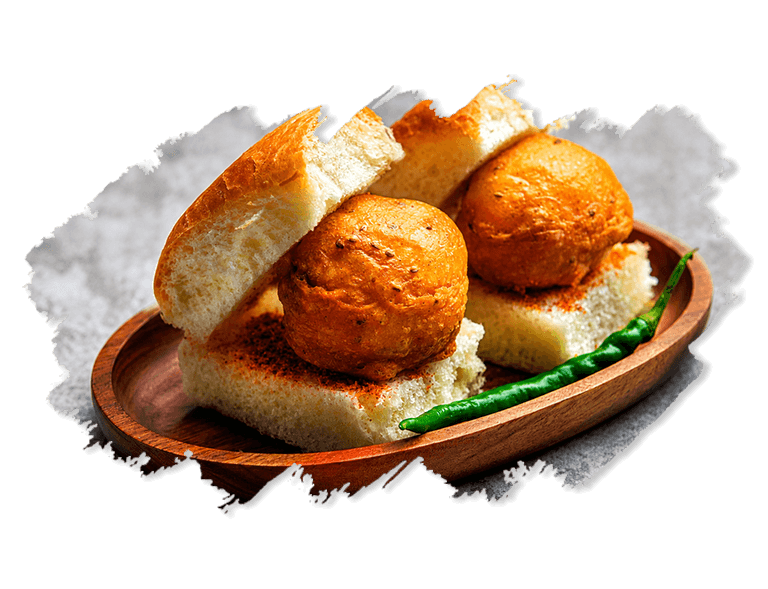
A trip to Pune or any place in Maharashtra is incomplete without trying out the iconic vada pav. It’s often referred to as ‘the Indian burger’ as it features a soft bun (known as ‘pav’) and a deep-fried potato patty (known as ‘vada’). This dish is said to have been created by Ashok Vaidya, a vendor who sold street food near the Dadar train station in the 1960s and 1970s. The ‘vada’ part of the dish refers to spicy mashed potatoes that are deep-fried in chickpea batter, giving the concoction a burst of flavour. It’s usually served alongside various chutneys.
Misal pav is a popular Maharashtrian street food consisting of a sprouted lentil curry that’s topped with farsan (fried savory mixture), tomatoes, onions, and coriander. It’s served along with a soft pav. The word ‘misal’ translates to ‘mixture’ pointing to the combination of various ingredients that make up this beloved dish.
Pav bhaji comprises of butter toasted buns (pav) and spicy mashed vegetables (bhaji). The bhaji is usually made using peas, potatoes, capsicum, and tomatoes. The roots of the dish can be traced back to the 1850s where it was invented by street vendors as a midnight meal wherein all the leftover vegetables from the day were mashed and mixed with ghee and spices.
Bhel puri is made using puffed rice, vegetables, and a mix of chutneys that are sweet, sour, and spicy. Some of the vegetables that go into making this dish are onions, tomatoes, and potatoes. The freshness of the veggies and the tanginess of the chutneys make this a fun street food to consume.
Poha is one of the most common traditional breakfasts people have in Pune. It’s made using flattened rice, curry leaves, mustard seeds, lemon, onions, coriander, onions, chillies, and peanuts. Some of the spices that go into making poha are turmeric, cumin, and asafoetida.
When you’re in the mood for something sweet and cold in Pune, you must try out the dessert named Mastani. Created by the brand Sujata Mastani, it’s a thick and creamy mango milkshake. The beverage consists of toppings like ice cream, fruits, and dry fruits.
Pune celebrates a variety of cultural festivals throughout the year. There is the Sawai Gandharva Bhimsen Mahotsav, an annual Indian classical music festival which was started by Pandit Bhimsen Joshi in 1953. It brings together renowned classical musicians from all over India. There is the Pune International Film Festival (PIFF) which was initiated in 2002 to develop a healthy film culture in the city. A diverse range of movies is shown during this festival, encouraging the promotion of film culture through masterclasses, enlightening discussions, and screenings.
Maharashtra is a potpourri of arts and crafts that can be traced back to generations. There are the Warli paintings, a kind of tribal art created primarily by the tribal people residing in the North Sahyadri Range in Maharashtra. These paintings make use of simple geometric patterns to depict trees, animals, rivers, and human figures. Among the crafts of Pune are Paithani sarees and Kolhapuri chappals, which are extremely popular among tourists.
Exploring the cultural landscape of Pune also entails visiting the many museums that found home in this diverse city. A must-visit museum in Pune is the Raja Dinkar Kelkar Museum, which was established in 1962 by Dr. Dinkar G. Kelkar and houses a collection of 20,000 artefacts. These include textiles, paintings, sculptures, and instruments that showcase Maharashtra’s rich cultural heritage. Those interested in art galleries, can visit the Frida Art House, Darpan Art Gallery, and Monalisa Kalagram.
The period between October to March is usually considered to be the best time to visit Pune.
April and May are usually the warmest months in Pune.
Pune is famous for its educational institutions, diverse culture, and a booming IT sector.
Pune is renowned for its IT, manufacturing, and automobile industries, because of which it’s called the ‘Detroit of India’.
We would suggest you set aside three days for a trip to Pune.
Some of the fruits that are famous in Pune are figs, mangoes, and apples.
Pune is known as the ‘Queen of the Deccan’ as it’s the cultural capital of Maharashtra. It’s brimming with educational institutions, historical significance, and vibrant culture.
The biggest festival in Pune is Ganesh Chaturthi.
The distance between Mumbai and Pune by road is about 150 km.
Share your travel dates and preferences. Our experts will create a personalised holiday for you.
☎ +91 83675 01501
✉ travelguru@gmail.com