

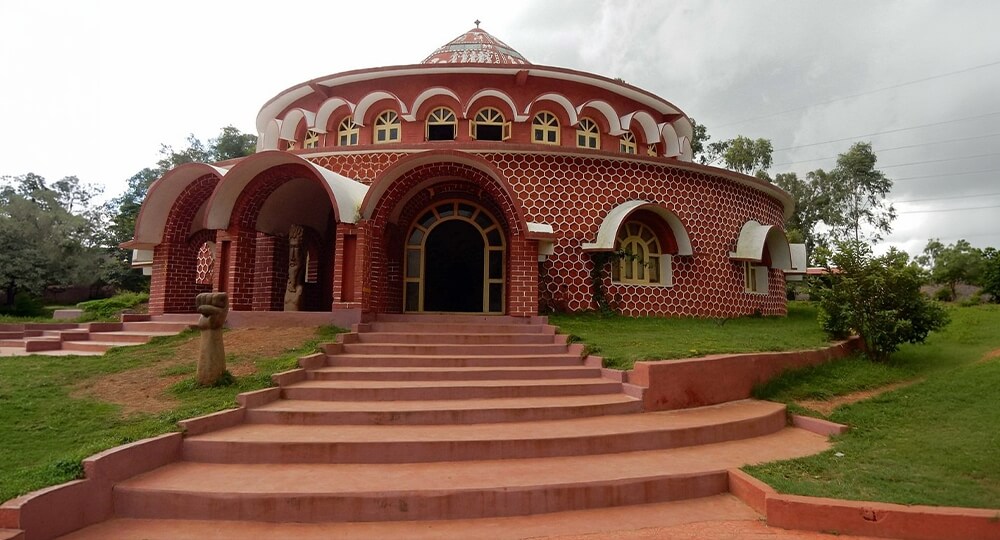
Araku Valley is a popular hill station in Andhra Pradesh, famous for its ancient caves, lush greenery, stunning waterfalls, and coffee plantations. It is also renowned for Araku Coffee, a premium organic Arabica coffee grown in the valley. The valley is also a great place to spend time amidst pepper farms and mango orchards. And if you are a fan of ziplining, hiking, or other adventure activities, Araku Valley is the best place to spend your vacation.
Call us or message us on Instagram to customise your Araku Valley tour package.
Araku Valley is a scenic hill station near Visakhapatnam, on the Ananthagiri Hills of the Eastern Ghats. Unlike popular hill stations like Ooty, Kodaikanal, or Munnar, Araku is relatively less crowded but equally scenic and enjoyable. The valley and its surrounding region are famous for their coffee plantations, orchards, waterfalls, and dense forests. The region is also well known for preserving the culture and lifestyle of its numerous indigenous communities, such as the Bagata, Valmiki, Kondadora, and Yenadis. If your idea of a vacation involves driving through hairpin bends, exploring coffee plantations, and enjoying scenic views, message us on Instagram for customised Araku Valley tour packages.
Before the British claimed to have discovered Araku, the Valley was inhabited by several indigenous communities, including the Khonds, Jatapus, Doras, Lambadis, and the Subba people. Given its geographical closeness to Odisha, the locals here speak a dialect that closely resembles Odissi and Telugu.
The British, who claimed Araku Valley in the early 20th century, tore down the trees for timber and even drove away the natives to promote coffee cultivation. It was around the 1960s that the Andhra Pradesh government decided to develop the region for tourism, leading to the construction of the first railway line, which allowed nearby residents to admire its panoramic views.
In 2007, the Naandi Foundation helped improve the economic conditions of the local Adivasi population by promoting coffee cultivation. They encourage the locals to shift to organic coffee cultivation and even helped develop the world’s largest tribal organic coffee farmers’ cooperative.
The valley is part of the Ananthagiri Hills in the Eastern Ghats and is located 3200 feet above sea level. It is home to the Ananthagiri and Sunkarimetta reserved forests, each rich in biodiversity, natural beauty, and mineral deposits. This beautiful hill station is located 120 km from the port city of Vizag and is close to the Odisha border. It is home to the Galikonda Hill, one of the highest peaks in Andhra Pradesh.
Coffee cultivation and tourism are among the region’s main economic drivers. The locals also cultivate spices and fruits and practice apiculture. However, since 2000, Araku Valley locals have managed to turn their fortunes thanks to a unique agricultural practice that produces high-quality Arabica coffee, called Araku Coffee, a premium coffee brand that’s famous all over the world.
The locals also make a living through tourism-related industries like accommodation, travel, sightseeing, and restaurants.
Call us or send a message on Instagram to learn more about Travel Guru’ Araku tour packages.
| Category | Details |
| Nickname | Ooty of Andhra Pradesh |
| State | Andhra Pradesh |
| High Season | October to February |
| Languages Spoken | Telugu, Odiya, English, and Hindi, along with tribal languages like Reli, Yerkula, and Kora |
| Famous Tourist Attractions | Borra Caves, Coffee Museum, Chaparai Waterfalls, Kothpaly Waterfalls |
| Famous Food | Bongulu Chicken, Bongulu Biryani |
| Souvenirs To Buy | Coffee, Handicrafts, Spices, Fruits |
Planning a holiday to this beautiful hill station in Andhra Pradesh? Call us to learn more about our Araku Valley tour packages.
While there are many natural formations in Araku Valley, Borra Caves are some of India’s largest and deepest natural caves, famous for their stalactite and stalagmite formations. Locally called Borra Guhalu, people believe that a cow grazing near the cave’s roof fell through a hole and found a Shiva linga that protected the animal.
The locals have been growing coffee ever since the British introduced it in the early 20th century. The region is famous for its high-quality Arabic coffee, especially around Ananthagiri, and for Araku coffee, a premium brand known worldwide among coffee connoisseurs. You can explore the estate, learn about coffee cultivation and processing, capture breathtaking views of the landscape, go trekking, or enjoy some freshly brewed coffee.
And if you’d like to stay in a coffee plantation for an immersive experience, call us at xxx to book Araku Valley tour packages.
Fed by the valley’s rivers and streams originating in the Eastern Ghats, Araku Valley is home to several waterfalls that cascade beautifully and look wholesome when surrounded by lush forests and set amidst scenic trails.
Katiki, the most famous of them all, originates from the Gosthani River and is located near the Borra Caves. The water falls from over 50 feet and is a popular picnic spot surrounded by greenery and clear waters. If you’d like to include Katiki Waterfalls in your Araku Valley tour packages itinerary, we suggest you inform us beforehand, as there is no public transport available and driving in regular cars can be challenging due to bumpy road conditions.
Chaparai, another popular cascade, can be reached by auto-rickshaw or taxi and is situated in the middle of a dense forest. You can glide through the smooth rocks like a slide, or enjoy some great Bongulu chicken and chicken Kababs sold on the streetside.
Some other popular waterfalls among tourists and locals include Tatiguda, Dharagadda, and Kothapalli.
The beautiful valleys offer panoramic vistas that look stunning and are worth capturing. For instance, the Galikonda Viewpoint is the second-highest peak in the Eastern Ghats and offers a wonderful view of the surrounding hills, valleys, rivers, streams, and hillocks. You will surely love the verdant greenery, especially in the morning, when mist envelops the hills.
Another scenic viewpoint, Madagada, is a great place to view sunrises and sunsets in Araku Valley. To the uninitiated, there are two viewpoints at Madagada – the first can be observed by trekking from the nearby parking area, and the second, which offers a unique view of clouds hovering above your head and offering a panoramic view of the lush forests.
The Rushikonda Viewpoint is on the way to Araku Valley and is a popular photo spot offering panoramic views of the ocean and surrounding hills.
The Dumuku Viewpoint is known for its captivating sunrises and sunsets, as well as magnificent views of the valley.
If you love adventure, Araku Valley is a great place to visit. You can explore the Borra Caves to learn more about the stalactites and stalagmites, and other natural formations. Or, trek your way to the Katiki Falls to dip into the calm waters. The Chaparai Falls trek is equally interesting and scenic thanks to the beautiful surroundings.
Besides trekking and hiking, you can always sign up for activities like zip lining, mountain biking, rock climbing, and target shooting at one of the many companies offering adventure Araku Valley tour packages.
It is heartwarming to learn that Araku Valley has preserved the culture of its indigenous communities by encouraging their participation in the mainstream economy. They are shareholders and major beneficiaries in the Araku Coffee enterprise.
As tourists, you can explore their rich culture, including their unique traditions and social customs, by visiting the Araku Tribal Museum, witnessing Dhimsa dance performances, and even seeing live demonstrations of traditional crafts.
Araku Valley experiences a subtropical highland climate with three distinct seasons: summer, monsoon, and winter. The valley’s high altitude makes it worth visiting year-round, but it’s especially beautiful in some seasons. Here’s a detailed description of the different seasons to help you choose the best time to book Travel Guru’ Araku Valley tour packages.
While the summer sun scorches the Indian subcontinent, people head to hill stations like Araku Valley to escape the blistering heat. Summers are hot but bearable, with temperatures averaging slightly above 30°C, though maximums can reach 35°C. There aren’t many tourists visiting the place, except during the weekends when locals from Vizag head to Araku for some relief. However, the high humidity during this season can be tiring, especially in the midday hours. It is a good time to choose affordable Araku Valley tour packages, as hotels will likely be cheap and tourist attractions will be less crowded.
The first few weeks of June begin to draw tourists for its pleasant weather and moderate rainfall. However, as the weeks progress, rainfall gets heavier and lasts until August. The problem with visiting during the monsoon is that landslides are common due to the hilly terrain. If you love lush greenery and would like to enjoy the waterfalls, we suggest booking Araku Valley tour packages for the end of August and September. The entire valley looks bright and beautiful. If you are visiting the valley during this season, we suggest you prepare well by carrying enough umbrellas and raincoats.
This is one of the best seasons to visit Araku Valley, as temperatures range from 10°C to 26°C. Sometimes temperatures can drop to single digits, reaching as low as 4°C. The days are pleasant, but nights can be chilly. This is a great time to explore the valley and its coffee plantations, and to enjoy freshly brewed coffee. If you are looking for the best time to visit the Ooty of Andhra Pradesh, we suggest booking winter Araku Valley tour packages. However, it is best to carry raincoats and umbrellas to protect yourself from the occasional post-monsoon showers.
Borra Caves are India’s largest and deepest limestone cave systems that were formed millions of years ago by the Gosthani River flowing through the limestone deposits. They were discovered by British geologist William King George in 1807, although locals had long known of their existence. In fact, a Shiva temple always existed within the caves, with locals believing that when a cow fell into the caves, Lord Shiva rescued it.
The caves are formed from karstic limestone that extends to a depth of 80 metres. Archaeologists have also discovered stone tools dating to the Middle Palaeolithic. These caves were once home to tribes like Jatapu, Kondadora, and Nookadora.
Cascading from over 50 feet, the Katiki Falls are a visual delight and perfect for trekking. Nestled in the lush green hills, the waterfalls can be reached by a short trek through the forests. It is also an excellent place for photography enthusiasts as the trail is surrounded by dense vegetation. The natural pool formed by water dropping from a height is perfect for swimming.
The beautiful Chaparai Waterfalls, surrounded by dense forests, are the perfect spot for tourists seeking a refreshing swim. The waters are generally safe for everyone as the flow is neither too deep nor too slippery. You can even slide through the smooth rocks to jump into the water. While monsoons are enjoyable, we suggest guests be very careful as the water flow can be heavy.
The different tribes of Araku Valley have their own unique cultures, lifestyles, and histories. If you’re interested in learning more about their practices, we suggest visiting the Tribal Museum to see their homes, utensils, dresses, wedding practices, and other religious rituals. You can also watch exhibits related to Dhimsa and Mayur, their local dance practices.
Galikonda is the highest peak in Andhra Pradesh and the second-highest in the Eastern Ghats. The vantage point at Galikonda is very popular, offering panoramic views of the surrounding forests, rivers, streams, and valleys.
The Padmapuram Gardens were built on a 26-acre property in 1942 to grow vegetables for soldiers during World War II. It was later converted into a horticultural nursery and training centre where rare flowers and plants, as well as orchards, are grown. You can also take the toy train, or climb the tree top huts for a bird’s eye view of the surrounding hills.
The Kothapalli Falls are located around 70 km from Araku Valley and are named after the Kothapalli village. They are located deep in a dense forest and formed when the Gosthani River flows over a series of rocks to plunge into a pool.
Also called Fish Pool, Matsyagundam is a famous spot in Araku Valley and is renowned for the Sri Matsyalingeswara Swamy Temple, dedicated to Lord Shiva. Locals believe that in a legendary battle between snakes and fish, the Mother Fish saved her kind by creating the pond.
This picturesque waterfall is also called Anathagiri Falls. Water cascades from over 100 feet and even offers a beautiful view of the surrounding landscape. You can descend to the foot of the falls, allowing you to bask in the waters. Tadimala Falls are not for the faint-hearted, as the 2-kilometre walk from the parking lot to the heart of the Ananthagiri Hills.
If you love bird watching, rock climbing, and trekking, we suggest visiting the Tyda Nature Park in Araku Valley. Located around 1300 metres above sea level, this Tyda Nature Camp is famous for its waterfalls, woodlands, and stunning landscapes.
The Araku Coffee House was set up in the 1950s by a migrant, Prakash Rao, to cater to coffee lovers. It later expanded into a museum, tracing the history of coffee in Araku Valley and learning how factors like geography, climate, and soil affect the taste and flavour of coffee. It also features tableaus depicting the process of coffee making, its journey from berries to brew. You can also see the different types of coffee beans from various regions across the world.
While there are plenty of coffee plantations in Araku Valley, you must explore the Araku Coffee Plantation, the world’s largest certified organic and biodynamic coffee plantation. Situated on the Ananthagiri Hills, the Araku Valley coffee plantations are worth a visit, where you can learn about organic farming, experience Adivasi culture, and enjoy fresh coffee.
Famous Attraction: Waterfalls, Scenic Viewpoints, Caves
Top Tourist Attraction: Rushikonda, INS Kursura, Yarada Beach, RK Beach
Famous Attraction: Viewpoints, Waterfalls, Gardens, Bird Sanctuary
Top Tourist Attraction: Kothapalli Waterfall, Kambalakonda Wildlife Sanctuary, Kondakarla Bird Sanctuary, Yerravaram Waterfalls, Lambasingi Viewpoint
Famous Attraction: Temples, Wildlife Sanctuary, Beach
Top Tourist Attraction: Satyanarayana Swamy Temple, Thalupulamma Talli Temple, Uppada Beach, Coringa Wildlife Sanctuary, Samarlakota
Famous Attraction: Temples,
Top Tourist Attraction: Sri Varaha Lakshmi Narasimha Swamy Temple
Famous Attraction: Historic Monuments
Top Tourist Attraction: Buddhist Monastic Complex
Famous Attraction: Historic Monuments
Top Tourist Attraction: Buddhist Monastic Complex
Famous Attraction: Lakes, Waterfalls, Scenic Viewpoints
Top Tourist Attraction: Duduma, Deomali, Maligura, Bagra Waterfall
Araku Valley is famous for its Bongulu Chicken, or Bamboo Chicken, where the chicken is mixed with spices, onions, and tomatoes and cooked in a bamboo tube, which is roasted directly over a fire. Another version of this is the Bamboo biryani, where rice is mixed with chicken and spices and cooked inside a bamboo tube.
Other popular street foods you can enjoy in Araku Valley include tomato Bhajji, Punugulu, and some spicy Andhra meals. Another iconic beverage you can enjoy in Araku Valley is the locally brewed Araku coffee.
You cannot visit Araku Valley and not buy its famous Araku coffee. The valley is also renowned for its spices, tribal handicrafts, bamboo items, wooden toys, organic honey, handmade soaps, and essential oils.
Call us at +91 83675 01501 to learn more about our Araku Valley tour packages.
Winter is the best time to choose Araku Valley tour packages. The period from October to March is pleasant and ideal for sightseeing, thanks to temperatures ranging from 10°C to 25°C. Sometimes, temperatures could drop to single digits, as low as 4°C.
Araku Valley is known for its coffee plantations, vast orchards, lush greenery, ancient caves, beautiful waterfalls, and a thriving indigenous community. Araku Valley is typically included in our Andhra tour packages or Vizag tour packages. But you can also choose our exclusive Araku Valley tour packages, which range typically from 2 to 3 days.
Yes, you can always customise your itinerary to include (or exclude) specific attractions.
Yes, Araku Valley is very safe for tourists. However, we encourage guests to avoid travelling after dark and keep their belongings secure, especially if they are travelling alone.
Araku coffee is a must-buy, along with tribal handicrafts, organic honey, spices, herbal oils, and strawberries, which are popular souvenirs from Araku Valley.
Some of the local delicacies in Araku Valley include Bongulo chicken, Mirchi Bhajji, and Bongulu Biryani.
Yes, Araku Valley is close to cities like Vizag, Lambasingi, and Jeypore.
Araku Valley is famous for its coffee plantations, Borra Caves, Ananthagiri Hills, Tribal Museum, Chaparai Falls, Tatiguda Falls, and Matysagundam.
Yes, family Araku Valley tour packages are popular thanks to the beautiful outdoor attractions, kid-friendly sights, and adventure activities for youngsters.
Share your travel dates and preferences. Our experts will create a personalised holiday for you.
☎ +91 83675 01501
✉ travelguru@gmail.com