

Morocco, Casablanca Moroccan Odyssey: From Casablanca to Marrakech – An 8-Day Exploration
7 Nights 8 Days

Explaining Morocco’s geography is fun. Not many know it is in North Africa, not Middle East Asia. And yet, it borders Spain, a European country. Also, most Moroccans identify as Berbers or Amazigh, even though the country is a part of the Arab League. The Moroccan Map is equally confusing, with three different versions available, depending on whether Western Sahara is recognised. If your idea of Morocco is limited to the markets of Marrakesh, the stylish city of Casablanca, and exquisite cuisine, you must check out our Morocco tour package to learn what makes this country unique.
Explaining Morocco’s geography is fun. Not many know it is in North Africa, not Middle East Asia. And yet, it borders Spain, a European country. Also, most Moroccans identify as Berbers or Amazigh, even though the country is a part of the Arab League. The Moroccan Map is equally confusing, with three different versions available, depending on whether Western Sahara is recognised. If your idea of Morocco is limited to the markets of Marrakesh, the stylish city of Casablanca, and exquisite cuisine, you must check out our Morocco tour package to learn what makes this country unique.
Morocco is located in the Maghreb region of Northeast Africa, bordering Algeria in the east and southeast, Western Sahara in the south, the Atlantic Ocean in the west, the Mediterranean Sea in the north, and Spain to the north (through the Strait of Gibraltar in the north and the enclaves of Ceuta and Melilla).
The earliest history of Morocco traces back to the earliest humans thanks to the remains of homo sapiens that were discovered in a Moroccan cave and believed to be between 250,000 to 350,000 years old. Fossil human remains in the Palaeolithic and Neolithic age suggest continuous inhabitation for thousands of years.
Later, between the 8th and 6th BCE, the Phoenicians established key trading posts along the Moroccan coasts. They also established the modern day cities of Tangier, Rabat, and Larache. They were later replaced by the Romans around the 4th to 3rd century BCE. Around the 6th century CE, Morocco came under the control of the Byzantines, who drove away the vandals who previously ruled the kingdom. It was around this time that Islam gained foothills along the Moroccan cities.
The Islamic age lasted for several centuries when the Ummayyad Dynasty took control of Morocco. During this time, the Islamic culture blended well with the local indigenous Berber or Amazigh culture. In the 8th century, Idris I set up the state of Morocco after fleeing Saudi Arabia, marking the beginning of a Moroccan nation and culture. His successor ruled the country from 788 to 974 CE. Modern Morocco’s religious tolerance is mainly due to the influence of the Idrisids, who encouraged astronomy, medicine and mathematics and were largely tolerant of other religions. Several dynasties, including the Almohad, Marinid, and Saadi, ruled the country. The monarch of Monarch, Mohammed VI, traces his lineage to the Alaouite Dynasty, established during the 1660s.
The country is home to over nine UNESCO World Heritage Sites, including the archaeological sites of Volubilis, the Medina of Marrakech, and the Medina of Fes.
As for the people, Moroccans are incredibly friendly and open minded. They are known for their hospitality and could even take offence to guests not accepting their food.
If you’d like to experience their hospitality, enjoy the cuisine, or shop at the local markets, check out the Morocco tour packages from Travel Guru Holidays.
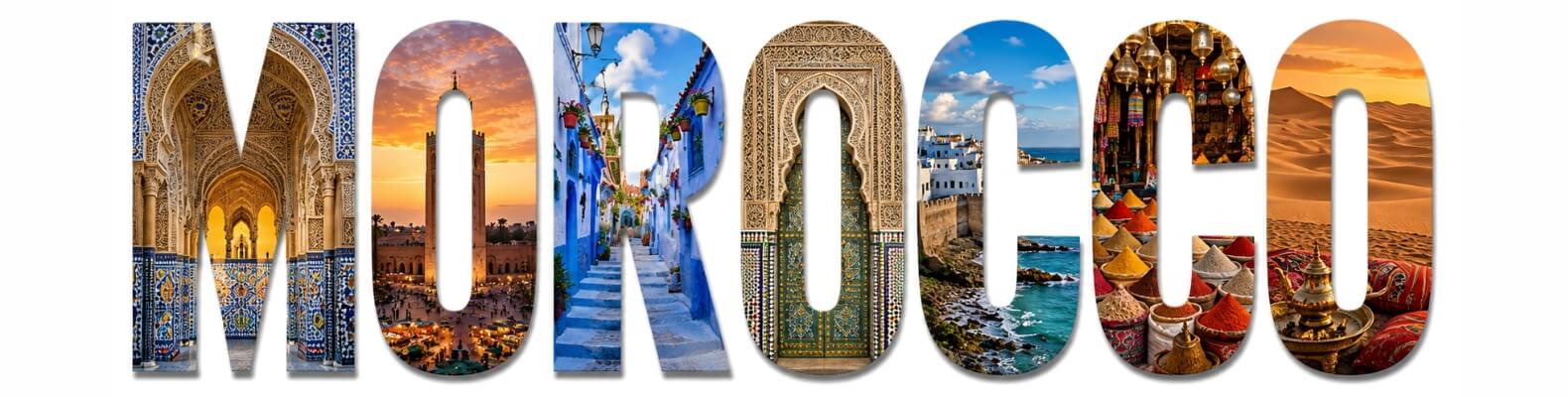
| Morocco Tour Packages | Duration | Highlights |
| Morocco Travel Package | 11 Nights 12 Days | Marrakech, Casablanca, Rabat, Fes, Erfoud, Midelt, Ouarzazate, Tinghir, Essaouira, Safi, El Jadida |
| Romantic Journey Through Morocco | 7 Nights 8 Days | Casablanca, Rabat, Fes, Erfoud, Tineghir, Ouarzazate, Marrakech |
| Moroccan Odyssey | 7 Nights 8 Days | Casablanca, Marrakech, Rabat, Fes, Meknes |
| Category | Details |
| Country | The Kingdom of Morocco |
| Capital | Rabat |
| Language(s) | Arabic (O), Amazigh (O), French (Un), English (Un) |
| Currency | Moroccan Dirham (MAD) |
| High Season | Spring (March-April) & Autumn (September-November) |
| Iconic Attractions | Hassan II Mosque, Koutoubia, Bahia Palace, Ouzoud Waterfalls, Marrakech, Tangier, Chefchaouen, Fes |
| Visa | eVISA for 30 Days |
| National Animal | Barbary Lion |
| National Flower | Damask Rose |
| National Food | Couscous |
| Standard Voltage | 220 Volt 50 Hz; Type C and E Socket |
While Morocco is geographically on the African continent, it is a mix of different ethnicities, races, and cultures. The country’s landscape is equally distinct from the rest of Africa – while the Sahara Desert covers the southern landscape, the Atlas Mountains separate the Mediterranean and Atlantic Coastlines from the desert. Here are a few reasons you must book a Morocco tour package:
As we said earlier, Morocco has a unique geography. It is the only African country with coastlines on the Atlantic Ocean and Mediterranean Sea. Its diverse topography includes the world’s largest desert, the Sahara, the vast Atlas Mountains covering most of Morocco, Mount Toubkal, the highest point of Africa, and long sandy beaches.
These beautiful landscapes make for epic sunrises and sunsets, whether you view them from the mountains, the deserts, or even your rooftop.
The mountains cover over 2000 km in Morocco, Algeria, and Tunisia and are divided into the High Atlas, Middle Atlas, and Anti Atlas each famous for its diverse landscapes and rich flora and fauna. Some towns you will visit along the mountainous regions include Marrakech, Meknes, Fes, Ifrane, and Oukaimeden.
As for the desert landscape, Merzouga opens doors to the Saharan vastness, where tourists can enjoy riding gigantic dunes, camel riding, camping, or driving a 4×4 vehicle.
With a history that stretches several millennia, Morocco is home to a unique blend of cultures influenced by the Berbers, Romans, Jews, Arabs, Spanish Moors, the Portuguese, and the French. Each culture has influenced Moroccan life through its language, culture, clothes, and food. In general, Morocco can be divided into two distinct cultures: Arab and Berber. While the Berbers were the original inhabitants of North Africa, having settled in the region some 5000 years ago, the Arabs entered the country around the 7th century. For instance, the Berber Arts include hand-woven rugs, jewellery, pottery, copper vessels, and even henna art. The Arabs influenced Morocco through calligraphy, mosaic tilework, Islamic domes, and a unique version of the Arabic language called darija. But don’t be surprised when Moroccans switch languages mid-sentence – from Amazigh to Arabic and French during a single conversation.
Chefchaouen is at the centre of Moroccan Jewish culture. Homes across the village are painted bright blue, earning the endearing nickname The Blue Pearl of Morocco. For the French influence, check the Gueliz area in Marrakech or the Art Deco buildings in Casa Blanca.
Most Moroccan cities, such as Fes, Tangier, Casablanca, and Marrakech, are dotted by ancient passageways full of people in bright and outlandish costumes, passing through houses painted in bright blue. The labyrinthed streets of Casablanca, Marrakech, and Fes are home to narrow, store lined alleyways selling spices, ceramic ware, leather goods, and other handicrafts.
The cities are also famous for their old towns, also called medinas, with their maze of alleys. While these alleys may seem haphazard at first, it doesn’t take a genius to understand the logic behind these walled cities. At the centre of these medinas is a mosque with a landmark minaret. Surrounding the mosque are commercial places like hammams, bakeries, souks, caravanserais and madrasas. Outside this commercial sphere are the residential houses complete with a courtyard.
The Medina of Fes is a UNESCO World Heritage Site with well-preserved madrasas, palaces, residences, fountains, and caravanserais built during the 13th -14th centuries under the Marinids.
Similarly, the historic city of Meknes is another UNESCO World Heritage site, with its Spanish Moor-style fortresses, granaries, caravanserais, private houses, and gardens built by the Almoravids in the 11th century. If you’d like to include these historical cities and sites on your Morocco tour package, call to speak to a Morocco tour specialist at Travel Guru Holidays.
A holiday to Morocco is incomplete without wandering in the twists and turns of the country’s ancient souks. For Moroccans, these aren’t just any other market – it’s at the heart of their culture and a general meeting point where everything from gossip to politics is discussed. Some of the best souks in Morocco can be found in Marrakech, Fes, Tangier, and Meknes.
Souk Semmarine in Marrakech is famous for its textiles, hand woven rugs and carpets, jewellery boxes, musical instruments, and lamps. Souk el Henna in Fes is the oldest market and the best place to buy typical blue and white ceramics and other staples like spices, leather goods, and jewellery. Souk Jdid in Essaouira to buy antiques, argan oil, and spices.
And if you are looking for culinary adventure, visit Jemaa el-Fna to try snail soup, camel spleen, sheep’s head, and harira soup. For a fine dining experience, book a dinner at the upscale Le Fondouk.
Most people’s introduction to Morocco is through Casablanca. Besides the iconic movie, plenty of big-budget movies were shot in the country, including Gladiator, Inception, The Mummy, and the Lawrence of Arabia. The historic cities and Mars like landscape provide the perfect exotic backdrop to Hollywood’s outlandish storylines.
The imperial cities (called so because they were once capital cities of royal kingdoms) of Fes, Meknes, Rabat, and Marrakech are famous for their walled enclosures, commercial and residential quarters, and grand palaces.
Meknes, a 9th-century medina in northern Morocco, is famous for its 17th-century Islamic and European architecture, city gates, winding alleys, grand mosque, and laidback Oriental vibe.
Marakkech is a historically significant city famous for its royal palaces, gardens, souks, Saadian tombs, bustling life, ancient medinas, and historic alleyways.
Casablanca is the largest artificial port in Africa. It is famous for its beautiful architecture, the towering Hassan II Mosque, and the numerous attractions in old and modern Casablanca. The old part of the city is renowned for its souks and charming neighbourhoods.
Fes was founded in the 8th century by Idriss I and is famous for its minarets, domes, madrasas, and the legendary University of Al-Qaraouine, the oldest university in the world. No wonder it is called the Athens of Africa.
Rabat, Morocco’s current capital, is loved by tourists for its boulevards, outdoor cafes, museums, and mausoleums.
If you’re looking for something unique, visit Chefchaouen, also known as Blue City, thanks to the many blue-walled buildings throughout the town.
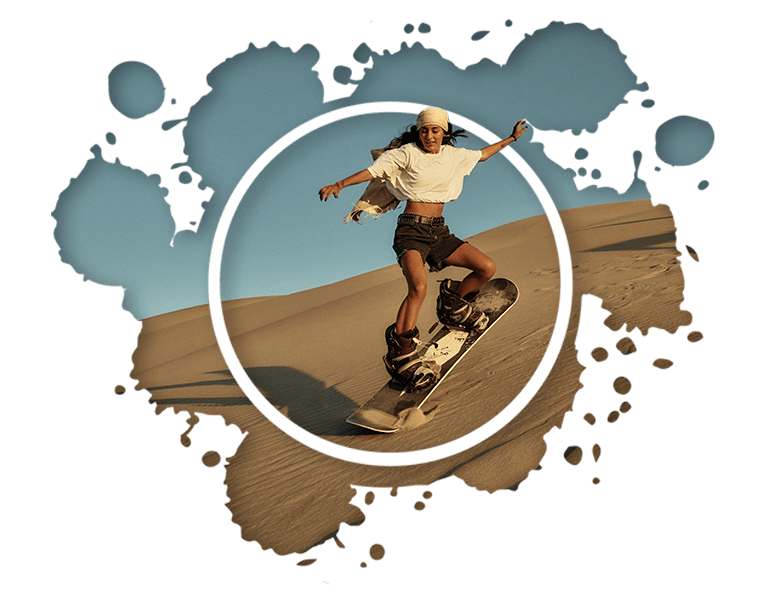
The Sahara is the largest hot desert in the world, spanning eleven countries, including Morocco. Its beautiful orange sand dunes, contrasting with clear blue skies, have served as the backdrop of several Hollywood movies. The picturesque landscape includes soft rolling hills, resembling a two-dimensional picture. You can spend a night in the desert watching the Milky Way or enjoying a quiet candlelight dinner. The local Berber people will entertain you with their stories and tales of the desert passed down to them from their ancestors as you sample their unique cuisine. To experience true Berber hospitality, we suggest you stay at a desert auberge with decorated courtyards and Kasbah like interiors. There’s also plenty of entertainment – you can go camel riding, dune riding, and even sand surfing.
If you’d like to admire the spectacular sights of the Sahara Desert, we suggest you include it in your Morocco tour package itinerary.
Like its culture, Moroccan cuisine is varied and a mix of Berber, Arabic, Andalusi, Mediterranean, French, and Spanish influences. The Moroccan couscous is part of UNESCO’s list of Intangible Cultural Heritage of Humanity, recognising its significance in Moroccan culture. The cuisine balances condiments and spices like cumin, paprika, cinnamon, turmeric, saffron, and ginger. Other ingredients special to Moroccan cuisine include preserved lemons, pickled olives, lemon juice, and flavoured waters like orange blossom water and rose water.
Mint tea is popular across Morocco and served daily with Moroccan cakes. Tagine is another dish and the name of a cooking vessel with a round base and a conical lid. The unique shape of this pot allows the vegetables or meat to cook in their own juices, thereby retaining their original flavour and aroma. Popular tagine dishes include lamb, beef, or chicken tagine, fish tagine flavoured with herbs and lemon, and vegetable tajine.
Some of the other dishes that are distinct to Morocco include Chebakia, Mechoui, Pastilla, and harira.
Berber is a Westernised name for the local Amazigh people. Amazigh translates to free men. True to their name, they believe in free will and were not bound by territorial boundaries until recently. The Amazigh people are the indigenous natives of North Africa who arrived in Morocco around the 2nd millennium. When the Arab Muslims conquered Morocco, they retreated to the mountains and deserts as they didn’t want to be colonised. This allowed them to preserve their unique culture, language, food, and belief system.
The Amazigh are very friendly, often inviting strangers to their homes for tea and a meal. In fact, tourists are advised to be careful about things they appreciate in an Amazigh house, as they are often offered as gifts.
Morocco largely experiences a Mediterranean climate, although some parts, especially in the south, experience a desert climate. The country experiences four seasons: spring and autumn being warm and pleasant, summers scorching hot, and winter cold yet comfortable. The best time to visit Morocco is the spring and autumn months. But if you are looking for affordable Morocco tour packages, we suggest visiting the country during winter. Here’s a breakdown of the different seasons and activities you can do during each season.
Spring is undoubtedly the best time to visit Morocco when the weather is pleasant and the landscape is vibrant with blooming flowers. Even cities like Marrakech, Erfoud, and Ouarzazate are comfortable with temperatures ranging from 24°C to 29°C, allowing you to explore the different historical landmarks without a heat stroke. You can enjoy warm and pleasant days with cool nights, allowing you to travel throughout the country, including the desert and mountains. We suggest packing clothes that you can layer, including a light wrap to wear during the night. If you are booking Morocco tour packages during spring, make sure you book in advance as this is peak tourist season.
As earlier said, summer is blithering hot, but the temperature varies depending on where you are in the country. For instance, cities near the desert, such as Marrakech, Erfoud, and Ouarzazate, will be hot with temperatures between 33°C and 39 °C. But coastal cities like Essaouira, Tangier, and Agadir experience moderate temperatures. Summer is still a good time in Marrakech, with lively open-air cafes, night markets, and hammams. Due to the extreme heat, most desert camps are closed from June to August.
Mild temperatures during the day and cold nights make autumn a perfect time to pick Morocco tour packages. The temperatures range from 26°C to 21°C in cities like Casablanca and Essaouira. Even Marrakech and Fes are pleasant, with temperatures between 28°C and 23°C. Mind you, the temperatures drop considerably during the night in autumn, remember to pack appropriately. It rains in Morocco during November, so make sure you plan your itinerary accordingly.
Morocco is lovely in winter. The weather is pleasant, the places aren’t crowded, and there are plenty of activities to enjoy as well. Temperatures in semi-arid cities like Marrakech and Fes are around 18°C. Night time temperatures are considerably low – almost 6°C. The only downside to a winter Morocco tour package is the intermittent rains, especially in December. Areas around the High Atlas experience snowfall, making it a great time for trekking and skiing. Not many people know about Oukaimeden, a ski resort 70 km from Marrakech. And if you don’t prefer hiking along the high terrains, visit areas around the Anti Atlas. The mountains around this area are lower and closer to the sea. These areas don’t experience snow, and the temperature isn’t as cold.
Marrakech is Morocco’s fourth-largest city and one of its four imperial cities. It was founded in the 11th century by Yusuf Ibn Tashfin of the Almoravid Dynasty. The city beautifully blends French influences with ancient Arabic and Amazigh influences in the Medina. The Gueliz District, also called the French Quarter, features wide boulevards, cafes, colonial buildings, and restaurants.
But the Medina is undoubtedly Marrakech’s top attraction with its live street entertainment, lively markets, vibrant squares, and delectable cuisine. Its most famous attractions include the Jemaa El Fna Square and the Koutoubia, the largest mosque in Marrakech. You could also stay in a riad or a traditional Moroccan house with an external courtyard and a stunning décor. Some of the must-visit places in Marrakech include:
Don’t miss the many souks in Marrakech and the street food experience at the Jemma El Fna Square, where you can eat everything from sheep’s head and camel’s spleen to escargot soup. But there’s normal food as well.
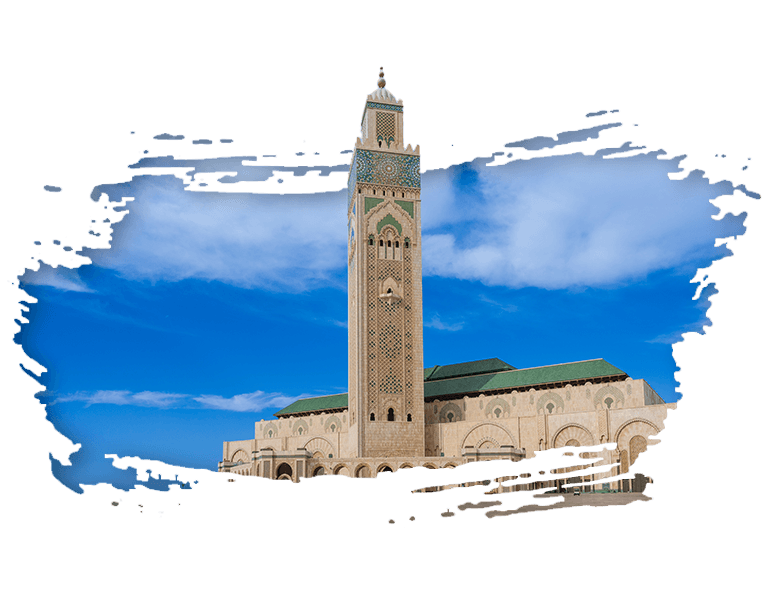
A Morocco tour package is incomplete without a visit to Morocco’s famous city, Casablanca. The Amazigh people call the town Al Dar al Bayda in Arabic and Anfa. The Amazigh people founded the city in the 10th century, but it was destroyed in 1755 by an earthquake. Casablanca is famous for its Art Deco buildings, arts and culture scene, beautiful art galleries and museums, and lovely French boulevards. The city is also a foodie’s paradise with restaurants specialising in classic French cuisine and Mediterranean fare. The nightlife is equally interesting. Some of the places you must visit in Casablanca include:
Don’t miss the beautiful Islamic architecture and the seaside promenades in La Corniche. The Royal Palace is the grandest and biggest landmark in Casablanca.
Tangier is right across the Strait of Gibraltar and is one of Morocco’s oldest cities, founded over 2,500 years ago. The city is often considered a portal to Europe, given its geographical proximity to Spain. Like every other city in Morocco, Tangier is divided into the new town and the old town or Medina. The old town is surrounded by a medieval wall with colourful markets, twisty lanes, and the Kasbah with its mosque, residential homes, and communal facilities like a bakery, baths, and even a phone desk.
The city is famous for its tangerines that grow abundantly in the region and is the home of the legendary Moroccan mint tea. Some of the places you must visit in Tangier include:
Don’t miss sipping some mint tea in Petit Socco, freshly baked goodies, and the many art galleries along the Kasbah.
Chefchaouen is a dreamy village with an artsy vibe, thanks to the blue-washed buildings and narrow winding lanes. The bright blue walls have earned the city its nickname, The Blue Pearl of Morocco. Chefchaouen was built in the foothills of the Rif Mountains by Moulay Ali Ben Moussa Ben Rachel El Alami in the 15th century and was originally a fortress to protect Morocco from the invading Portuguese.
While there are many stories explaining the origin of the blue walls and buildings, it’s generally believed that the Jewish and Muslim refugees painted them blue to signify the presence of God. Another version of this story claims that Jews fleeing Hitler’s persecution painted it blue to ward off mosquitoes and prevent malaria. Besides walking along the narrow alleys, some of the things you will do in Chefchaouen during your Morocco tour package include:
Don’t miss strolling through the handicraft shops, which sell a wide range of products, including carpets, leather goods, handcrafted wooden artefacts, and brass materials.
With its rich history and culture, Fes is definitely Morocco’s cultural capital. The city is also home to the world’s oldest Medina and the world’s largest open air tannery, the Chouara Tannery. Fes is home to Quaraouiyine Mosque, the largest mosque in North Africa. It was founded in the 8th century by Idriss I, the founder of the Idriss Dynasty. The beautiful buildings, mosques, and madrasas have helped the city earn the nickname the Athens of Africa. Some of the places you will cover during your Fes tour include
Did you know the Fes Medina is one of the largest car-free zones in the world, where donkeys and mules ferry passengers and goods along the narrow alleys? Don’t miss shopping for jewellery, metal artwork, leather goods, and handwoven carpets.
Essaouira is an 18th century famous for its UNESCO listed attraction and laidback vibes. The city was founded by Sultan Sidi Muhammad Ibn Abdullah. The Medina of Essaouira is a fortified town with three entrances: Bab Marrakech, Bab Sbaa, and Bab Doukkala. Your Morocco tour package will include a tour of the Old Medina, where you’ll visit the Mohammed Ben Abdallah Museum and the Games of Thrones filming locations. Some of the other things you will do include:
Don’t miss shopping for argan oil and enjoy the local delicacies in Essaouira Souk. You can also enjoy dining at one of the many restaurants in Essaouira.
Visiting the Sahara is often a once in a lifetime dream for many. If you’re considering a trip to the world’s largest hot desert, check out our Morocco tour package. You will fly from Marrakech or Fes to Merzouga, a beautiful village with a surreal view of the Saharan landscape. A typical desert camp tour includes riding on a camel to the desert, joining the local Berber people for lunch, enjoying the sunset, staying in a Berber tent, and waking up to a beautiful sunrise. At night, you’ll also enjoy the local Berber singing, dancing, and having a candlelight dinner. And, of course, unlimited mint tea! Don’t miss gazing at the Milky Way at night.
Other activities include horse riding, buggy riding, hiking on the sand dunes, sandboarding, and rock climbing in the Todra Gorge. Some of the cities you will visit along the Sahara Desert include:
Moroccan cuisine is impacted by the country’s historical influences and great dynasties like the Almoravides, Almohades, Merinides, Saadians, and Alaouites. The tagine, Morocco’s greatest export, was introduced by the Berbers, who also introduced the technique of preserving meat. The Arabs also greatly influenced Moroccan cooking, introducing spices, nuts, and dried fruits. The Spanish Moor influence can be seen in using olives and olive oil. As for the French, their influence can be seen through the many cafes and patisseries seen across Morocco.
Moroccan cuisine is incomplete without spices, such as saffron, cassia, cumin, paprika, orange blossom water, preserved lemons, and ras el hanout.
Some of the things you must try in Morocco include:
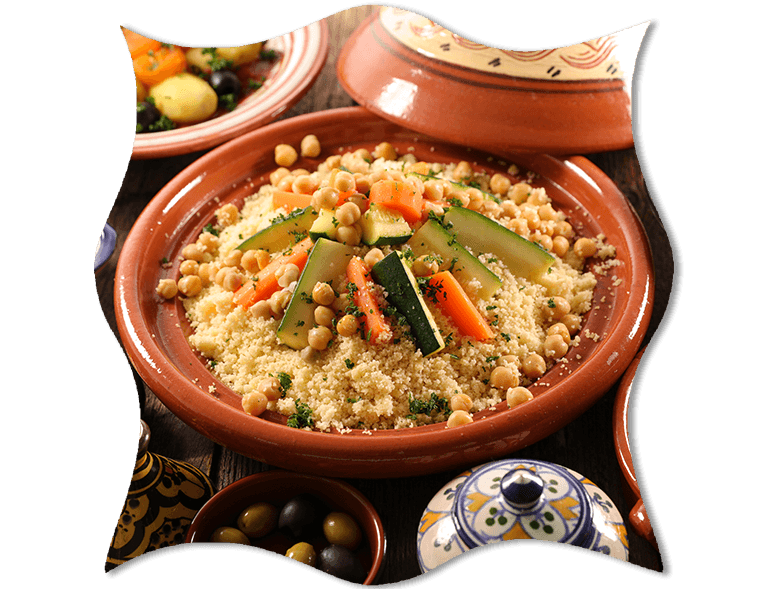
Couscous is an integral element of Moroccan cuisine. It is served during religious ceremonies and festivals, signifying abundance and celebration. The food originated among the Berbers, as wheat was easily accessible. Couscous can be eaten warm or cold, as a dessert, as a side dish, or as a main dish served under meat or vegetable stew. It is a communal dish and meant to be eaten with hands.
Tagine is the name of a dish and the utensil in which it is prepared. The dish involves slow-cooking vegetables and/or meat along with spices, herbs, and a little oil. The unique design of the pot allows the ingredients to cook in their own juices, infusing their flavours. Some tagine dishes include dried fruits, resulting in a sweet and savoury flavour. Some popular tagine recipes include chicken tagine, pastilla, a famous chicken filo pastry pie, and fish tagine. The tagine is served warm with bread.
You’ll find mint tea everywhere in Morocco. It’s sinfully sweet and made by infusing peppermint, spearmint leaves, and gunpowder tea. The tea is poured from a height to create a foam called crown.
Harira is a traditional soup made using lentils, chickpeas, and lamb and flavoured with tomatoes, lemon juice, chopped coriander, and spices like turmeric and cumin. It is a typical meal to break the fast during Ramadan as it is hearty and filling.
Some of the other dishes you must try during your Morocco tour package include mechoui or grilled lamb, chabakia a scented pastry seasoned with sesame seeds, makouda, rfissa, zaalouk, and kefta mkaouara.
With its vibrant colours and intricate designs, Morocco is heaven for shopaholics. Besides giant malls and small craft shops, you can shop at one of the many ancestral bazaars in every city. Also called souks, these bazaars are the lifeline of an average Moroccan, selling everything from spices and herbal medicines to utensils, clothes, shoes, jewellery, and home décor items. Some of the things you can buy in Morocco include:
The tagine is one of the most popular utensils people buy in Morocco. Some of the things you can buy include traditional blue and white ceramicware, plates, ashtrays, servingware, and decorative vases. While Safi is an excellent shop for iconic blue and white ceramicware, Fes is famous for its custom made floor tiles and decorative boxes. But you’ll find them across the country and, in some places, even allowed to visit the factory to learn how they are made.
Fes is a great place to buy handcrafted leather goods, including babouches, bags, pouffes, belts, and even homeware, thanks to the world-class tanneries. If you have the budget, you can also buy a suede jacket. The best thing about these leather goods is that the processing is done traditionally and dyed naturally. Prices vary depending on the quality of the type of hide used (camel, goat, cow, or sheep), the craftsmanship, and the product purchased.
Argan oil is a rare oil extracted from the kernels of the argania tree. The oil is edible and traditionally used by Moroccans as a dip or drizzled over food to enhance its taste. But the world over, argan oil is used for its positive effects on the skin and hair. We suggest buying them from the women’s co-operatives as they are reasonably priced and aren’t blended with cheap alternatives. You’ll also be helping the rural Amazigh women who initially produced these oils but had their livelihoods taken away due to large scale manufacturing.
Moroccans are famous for their intricately carved brass and copper goods, viz., lanterns, platters, teapots, cookware, and mirrors. While Fes and Marrakech are great places to buy metalware, you can shop for them across Morocco’s old souks and antique stores.
You’ll find shops displaying sacks of colourful spices all across Morocco. While you can buy traditional spices like cinnamon, cardamom, and nutmeg for a lot cheaper in India, look for exotic spices like berbere mixture, baharat mixture, sumac, and zaatar, and edible fragrances like rose water and orange blossom. Don’t miss dried tea fragrances like hibiscus and mint. You must also buy ras el hanout, a well-known Moroccan seasoning mixture made using over 35 spices, including cardamom, cumin, clove, cinnamon or cassia, dried rosebuds, dried orris roots, nutmeg, mace, aniseed, allspice, dry ginger, chilli, coriander, pepper, paprika, dried ash berries, fenugreek, and turmeric.
Carpet and rug making is another ancient skill passed on by Amazigh families. You can find them across the souks, with prices ranging from a few thousand dirhams to a few hundred, depending on the intricate design. We suggest you buy from a local cooperative for a fair offer. If carpets and rugs seem expensive, you can purchase decorative pillowcases. The Jemaa el Fna market square is a great place to buy the latter.
Some of the other things you can buy in Morocco include distilled rose oil, Thuya wooden boxes, jewellery, tea sets, handmade soaps, scarves, olives, dates, and antiques.
Moroccan culture is a blend of Amazigh, Arabic, Andalusi, African, and Mediterranean influences. The local Amazigh people express their culture through carpet making, jewellery making, pottery, and metalwork. Female Berber women tattoo their faces and arms with geometric designs to protect themselves from harmful spirits.
A common element of Moroccan art is the geometric patterns and natural imagery over images of human and animal forms.
As for musical instruments, flutes, tambourines, bagpipes, and drums are common instruments across the Maghreb.
The Arabs influenced Moroccan culture through calligraphy adorning Moroccan walls, doorways, and religious monuments. Zellige, traditional glazed mosaic tiles, are handcrafted and famous in Morocco. As for architecture, fountains are an integral aspect of Islamic Moroccan buildings as they offer a place for Muslims to perform purification before prayers.
Spanish Moors also influenced Moroccan architecture through their white stucco facades, red-tiled roofs, and hand glazed tiles.
A discussion on Moroccan culture is incomplete without souks or markets. These are an integral part of every Medina or town and the central meeting point of rural Moroccans. You can buy everything in these souks, from everyday items like olives and spices to home décor items and jewellery. Most souks have communal facilities like bakeries, fountains, public baths (hammams), and schools.


Share your travel dates and preferences. Our experts will create a personalised holiday for you.
☎ +91 83675 01501
✉ travelguru@gmail.com