
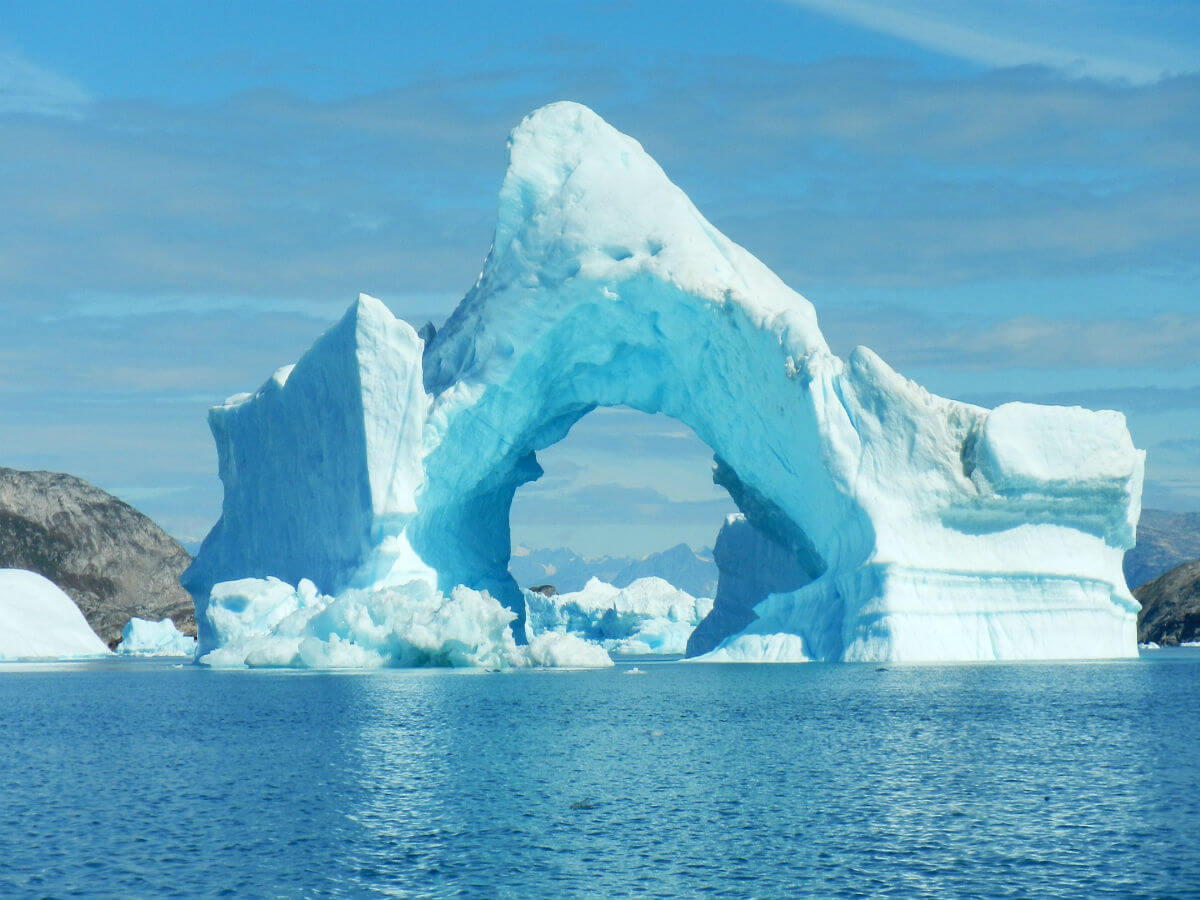

Imagine an almost untouched location that brings all your dreams of a winter wonderland to life; that’s Greenland for you. Located in in the North Atlantic Ocean and known to be the largest island in the world, Greenland is called Kalaallit Nunaat by the locals, translating to ‘country of the Greenlanders’. Despite what the name of the country could suggest, Greenland is not abundant in greenery and is instead covered in ice and glaciers. If you wish to witness all the beauty that Greenland has to offer, then check out our fabulous Greenland tour packages.
Imagine an almost untouched location that brings all your dreams of a winter wonderland to life; that’s Greenland for you. Located in in the North Atlantic Ocean and known to be the largest island in the world, Greenland is called Kalaallit Nunaat by the locals, translating to ‘country of the Greenlanders’. Despite what the name of the country could suggest, Greenland is not abundant in greenery and is instead covered in ice and glaciers. If you wish to witness all the beauty that Greenland has to offer, then check out our fabulous Greenland tour packages.
When a new constitution was adopted by Denmark in 1953, it led to Greenland becoming a county within Denmark instead of a colony. As a result of this, the rights enjoyed by the Danish citizens applied to the Greenlandic population as well.
The Danish control, however, came to be resented by the people of Greenland in the 1970s and the residents wanted to have better control of the government. They wanted home rule to be established in 1979, which officially happened in May of that year. In February 1982, a part of the population of Greenland voted to leave the European Economic Community (EEC), which ultimately led to the Greenland Treaty of 1985.

| Greenland Tour Packages | Duration | Highlights |
| Greenland Holiday Package | 6 Nights 7 Days | Nuuk Art Museum, Ilulissat, Kangeq. |
| Category | Details |
| Country | Greenland |
| Currency | Danish Krone |
| Capital City | Nuuk |
| High season | June to September |
| Visa | Schengen transit visa |
| National Animal | Polar bear |
| Languages | Greenlandic, Danish |
| Famous Tourist Attractions | Northern Lights, Ilulissat Icefjord. Nuuk Cathedral. Nuuk Art Museum |
| Things To Do | Skiing, hiking, dog sledding, whale watching |
| Famous Food | Suaasat, musk ox, lumpfish roe, dried cod |
| Places To Visit | Nuuk, Ilulissat, Sisimiut |
| Souvenirs To Buy | Kitschy Glasswork, skincare, jewellery, tupilak |
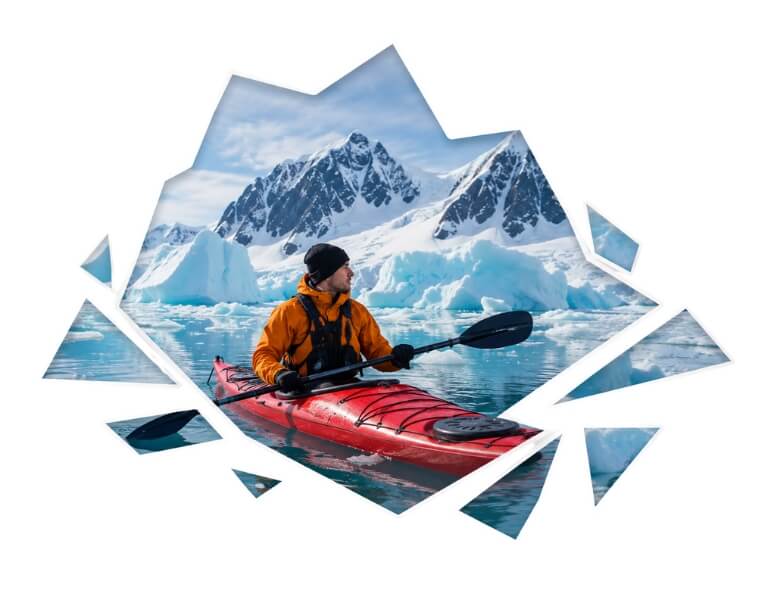
The visual beauty of Greenland cannot be described in mere words. The icebergs and glaciers of Greenland alone make for some of the most stunning backgrounds for photographs. With royal blue waters and snow-laden peaks all around, you can experience the natural wonders of Greenland through activities like kayaking, hiking, and dog sledding.
Our Greenland tour packages give you the opportunity to mush around in the snow and catch sight of wildlife such as musk oxen, polar bears, seals, whales, walruses, and numerous bird species. You will also get to visit the Greenland National Park, which is the largest national park in the world and is home to animals like musk oxen, walruses, polar bears, stoats, arctic foxes, hooded seals, harp seals, and ringed seals.
Greenland has a strong sense of community that dates back to thousands of years when people would stick together to survive the harshest of winters. This warmth and friendliness of the people and the cultural diversity are some of the many factors that will draw you to Greenland.
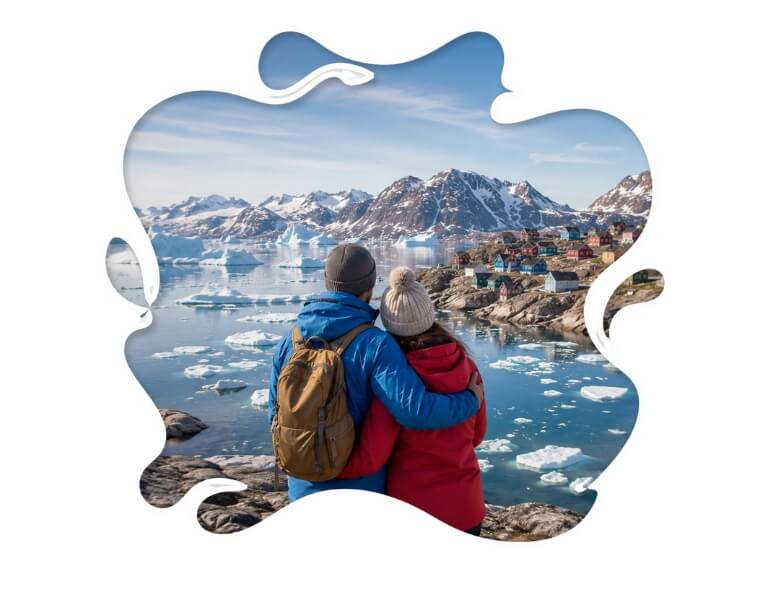
For most people, witnessing the magical Northern Lights is enough of a reason to travel to Greenland, and rightfully so. Watch as the planet puts up the best natural light show with colour transformations and neon illuminations against the dark sky.
While Greenland may be surrounded by ice, the culture of the country is anything but plain. Right from the traditional costumes to the beaded jewellery, every bit of a local’s ensemble in Greenland is vibrant and colourful. This also holds true for the brightly painted homes in the quaint villages of Greenland.
The peak tourist season in Greenland is from June to August, which is also considered as the best time to visit the country. Since the island is immense, the weather and temperature vary quite a bit from one region to another. In southern Greenland, for example, the temperature goes a few degrees below freezing during the winter season, but they can go as low as -30 degrees Celsius in the extreme north.
The midnight sun is visible in the northernmost towns of Greenland from late April to late August, which is a phenomenon where the sun doesn’t set for days or months. Let’s see what each season in Greenland brings along so you can decide when to book our Greenland tour packages accordingly.
Spring is a time of transformation in Greenland. The sun makes a reappearance, the skies become blue, and the duration of daylight gradually increases. The temperature during the spring months in Greenland ranges from -2 degrees Celsius to 15 degrees Celsius.
The combination of the snow and the sun provides the perfect ambience for activities such as skiing, dog sledding, snowshoeing, and snowmobiling. It’s still possible for tourists to view the Northern Lights until March or April.
The summer days in Greenland are bright, long, and balmy, with the temperatures oscillating between 10 degrees Celsius to 20 degrees Celsius. Travellers get to witness the local wildlife, sprawling valleys, and hot springs during the summer months.
As the coastal regions become green and free of snow, you can participate in activities like kayaking, hiking, and camping. Late summer is ideal for whale watching along the western coast. Get ready to spot humpback whales and migratory birds at this time with our Greenland tour packages.
Even though autumn doesn’t last for long in Greenland, the landscape of the country begins to change drastically, and hues of yellow, orange, and red are visible all around. With the temperature ranging from 1 degree Celsius to 16 degrees Celsius, this period is perfect to go hiking and catch an early glimpse of the Northern Lights.
The weather starts getting cooler and most birds complete their migration to the southern region by early September. The country isn’t too crowded at this time, and since the mosquitoes usually disappear by the fall, you can enjoy the outdoor activities to the fullest.
If you live somewhere in India where winter doesn’t really exist, then experiencing Greenland’s winter wonderland will truly be a thrilling adventure. You can view the Northern Lights in all their glory at this time and also enjoy snowshoeing, snowmobiling, skiing, and ice fishing.
The days get shorter, the temperature remains between -4.5 degrees Celsius to 20 degrees Celsius, and darkness engulfs the country, making it ideal to spot the Northern Lights. The icebergs and snowcapped mountains make it worthwhile to bear the extremely cold climate.
The activities you will get to experience in Greenland are truly unique and unlike what any other place has to offer. Be it the places you can explore with your family or the outdoor adventures you can partake in, here are the best things to do and see in the country with our Greenland tour packages.
The captivating phenomenon of the Northern Lights is something everyone should experience at least once in their lifetime. The science behind it was explained in the 20th century. Kristian Birkeland, the Norwegian scientist, came up with the theory that when the electrically charged particles from the sun reacted with the Earth’s magnetism and the gases present in the atmosphere, it created the Northern Lights.
The position of Greenland in the Arctic Circle provides the perfect location to view the Northern Lights. The natural phenomenon has also woven its way into the beliefs of the Greenlandic people over the centuries. The best time to witness this kaleidoscope of colours in Greenland is from September to March.
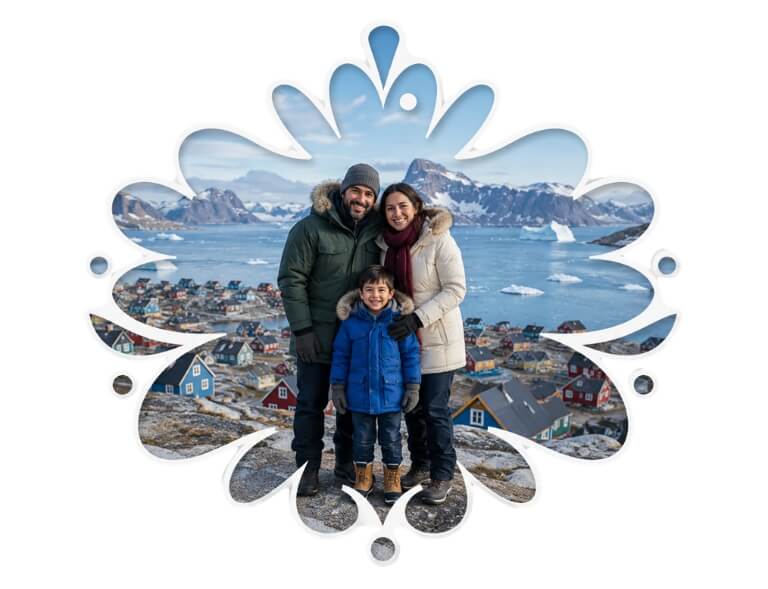
Ilulissat Icefjord is a fjord located on Greenland’s west coast and is among the few glaciers through which the ice cap of Greenland reaches the sea. It became a UNESCO World Heritage Site in 2004. Late into the evening, during the golden hour, is when you can get the best view of the ice. You can opt for a midnight cruise in the Ilulissat Icefjord after your dinner to watch the colours of the icebergs shift from white and blue to hues of red and orange as they get struck by the midnight sun.
Situated on Greenland’s western coast is a massive bay known as Disko Bay. The shorelines of the bay have been inhabited since the 10th century from the time of the first settlement of the Vikings in Greenland. It has served as a vital area for fishing and hunting for the local Inuit communities and is currently populated with several villages and small towns.
Nuuk Cathedral, which is also known as the Cathedral of Our Saviour, is a wooden Lutheran cathedral located in the Old Nuuk neighborhood of Greenland’s capital city. The structure was built from 1848 to 1849 and its towering spire and red wooden exterior make it a vital landmark. A huge crowd often gathers around the cathedral during Greenland’s National Day celebrations.
Katuaq is a cultural centre in Greenland which was inaugurated in February 1997. The main hall of this cultural hub has two auditoriums, wherein the larger auditorium can accommodate 1008 people and the smaller one can host 508 people. Numerous concerts, parties, meeting, conferences, and theatre shows are held at this venue that not just puts up entertaining performances but also displays contemporary Greenlandic art.
The Greenland National Museum is a museum which displays ancient Greenlandic artifacts. Inaugurated in the 1960s, it was one of the first museums to be established in the country, offering a deep insight into the ecology, landscape, and culture of Greenland. Various local artwork and Greenlandic handicrafts can be found within this museum that helps in widening your knowledge regarding Greenland’s history.
Plenty of hot springs exist in Greenland, but the island of Uunartoq is the only region warm enough for tourists to bathe in. The hot springs are surrounded by drifting icebergs and mountain peaks, providing a spellbinding view as you swim in the warm water and soothe your body and soul.
Nuuk Art Museum is the largest art museum in Greenland. Founded in May 2005, it’s home to an impressive collection of drawings, paintings, and figures made out of wood, ivory, and soapstone. Sprawled over an area of about 600 square meters, the museum has more than 150 paintings of Emanuel A. Petersen, the renowned Greenlandic painter.
We design our Greenland tour packages in such a way that you get ample time to go around shopping for the unique souvenirs available in the country. Listed below are the Greenlandic mementoes that you can take back home for yourself and your loved ones:
Kitschy glasswork is a specific type of glass artwork that is commonly created in numerous workshops in the capital city of Greenland, Nuuk. In order to make such pieces, a silica sand mixture is heated at a high temperature and then moulded into various forms. Candle holders and plant decors are the most popular kinds of pieces made under this category of glasswork. Based on the boutique you shop from, you can have your purchased pieces shipped to your country of residence.
Two women from Greenland, Pipaluk Silassen and Anne Mette Koustrup Nielsen, created their own skincare line a couple of years ago. Inua Care, which is the name of the venture developed by this daughter-in-law and mother-in-law duo, has products that are made using ingredients specific to the country. Make sure to grab some skincare products for yourself and pamper your skin with the goodness of ingredients like lavender, chamomile, and juniper.
If you wish to gift something unique to the accessory loving people in your life, then you must buy some colourful pieces of beaded jewellery for them from Greenland. The vibrant hues of these jewellery pieces go perfectly with the traditional costume of the country.
Greenland is known to produce some of the warmest and most luxurious wool in the world. Created from the coat of musk oxen, musk wool even surpasses cashmere in terms of its rarity and sophistication. Qiviut, which is the name for the inner wool of a musk ox, is the kind of soft material that helps keep the people of Greenland warm during the cold winters. You can take your pick from scarves, gloves, hats, ponchos, and wrist warmers.
A tupilak is a ritualistic figure that is made from the bones of animals. The intricate designs found on these souvenirs are often made from musk oxen, reindeer, and walruses. These are made into various kinds of products, such as jewellery, knitting needles, knives, and corkscrews.
One of the great joys of visiting a new place is getting to taste its food, and that’s exactly what you will experience with our Greenland tour packages. The cuisine of Greenland primarily focusses on the meat of marine mammals, fish, and birds. Usually packed with high levels of protein, Greenland’s cuisine is quite influenced by Canadian, American, British, and Danish food. Since the country is majorly covered by glaciers, the most common food source is the sea.
Although green vegetables aren’t commonly seen in Greenland, the scenario has shifted a bit due to climate change, thereby extending the growing season. This has allowed the farmers of the country to grow crops such as broccoli. Potatoes and rice provide most of the starchy content in Greenland’s meals, with onion being a common ingredient in majority of the dishes.
Suaasat is known as Greenland’s national dish. The primary ingredient of this traditional Greenlandic soup is seal, which is a vital part of Inuit cuisine. In addition to seal meat, the thick broth of the soup is created using onions, barley, black pepper, salt, and bay leaves. Rice is often used in place of barley, and some replace seal meat with sea birds, caribou, reindeer, or whale. The soup is a common dish to serve during Christmas, but it’s also consumed throughout the year.
Mattak, which is basically sliced whale, is a staple food for the locals of Greenland who live in harsh weather conditions. This dish is made from the skin and underlying fat layer of a whale and is often served during special occasions and festivals in the form of small cubes. The locals prefer to consume it raw, roasted, or boiled. The dish has been given the name of ‘Greenlandic chewing gum’ due to its chewy texture. Make sure to chew it properly before swallowing it.
Musk ox is the largest land mammal in Greenland, and the fur of the animal is of such high quality that it’s used in making clothes and blankets. The species is also a delicacy of the country, and its lean meat is utilised in numerous dishes, enhancing their taste with its tenderness and juiciness. It’s served in several restaurants across Greenland as steaks, soups, and tartare. Chefs also like to cook musk ox in a medium rare form to amplify its flavour.
Wild berries grow in abundance in Greenland. This includes alpine bearberries, crowberries, blueberries, blackberries, and juniper berries. These wild berries are a vital part of Inuit cuisine and are either eaten raw, cooked, or as a post-meal dessert. The red alpine bearberries are often served with fish.
Lumpfish roe, which is a go-to alternative for caviar, is a common appetiser in several restaurants across Greenland. Lumpfish is one of the most popular fish in Greenland, with the dish often being referred to as ‘the caviar of the north’. Roe refers to the fully ripe internal egg of a fish, and as you bite into it, you get to taste its salty and mild texture.
Cod is a fish that majorly dominates the fishing industry in Greenland and is a vital part of the Inuit diet. Due to the cold waters of the Arctic, the fish gets to grow slowly and become more flavourful. The fish has a mild taste and while it can be cooked in multiple ways, having it dry is one of the most common ways to eat it. In fact, dried cod has been a beloved snack since the time of the Vikings. The fish is often paired with butter.
The ptarmigan is a small bird that is native to the Arctic and is particularly visible in the country during autumn and winter. The feathers of this bird transform from brown in the summer season to white during the colder months. The gamey meat of a ptarmigan resembles that of a pheasant and is quite a delicacy in Greenland. The breast or thigh of the bird is marinated and then served either boiled or raw, usually along with roasted potatoes.
Seal, which is known as ‘puisi’ in Greenland, has been a primary part of the Inuit diet for centuries. The meat of a seal is high in protein, and the fat tends to keep the human body warm during the harsh winters. You can consume seal dried, boiled, stir-fried, deep-fried, marinated, or grilled in the form of a steak.
Greenlandic lamb, which is known as ‘sava’, is one of the best quality lambs in the world because of the country’s unspoiled and clean rearing conditions. It’s of particularly good quality in the southern region of Greenland because that’s where green grass grows beyond the Arctic Circle. You can try lamb sausage, lamb cutlet, or lamb soup mixed with turnips, celery, potatoes, and carrots.
Kaffemik is a vital tradition and social gathering in Greenland where friends, family, and neighbours come together to celebrate special occasions and socialise. People bring gifts, exchange stories with cakes and coffee, and catch up with each other. Greenlandic delicacies such as dried fish and seal are often served at these gatherings.
Drum dancing is a Greenlandic dance where people dance to the beat of Inuit drums. This is accompanied by throat singing, chanting, and storytelling that talks about the rich cultural heritage of the Inuit population. Some of the songs involve stories and myths regarding people and animals.
Mask dance has been around in Greenland for more than 4,000 years. Back in the day, it was used as a form of entertainment during cold, long winter nights. This dance form can either have a single dancer or multiple dancers. The performers could paint their faces or put something in their mouths so that they don’t get recognised. The colours that are normally used to paint one’s face for a mask dance include black, red, and white. Some dancers also use objects such as animal bones to amplify the scary effect.
Greenland’s National Day is celebrated on 21st June. On this day, celebrations take place that involve speeches, morning songs, flag hoisting, a church service, and entertainment such as folk music, dancing, and a display of one’s kayaking skills. There is also the Qooqqut Festival, which is a weekend-long music festival that takes place in the Nuuk Fjord region.
Share your travel dates and preferences. Our experts will create a personalised holiday for you.
☎ +91 83675 01501
✉ travelguru@gmail.com